
 Tom Hiddleston fans won’t be disappointed; they might even be impressed with his academic knowledge. Yet you don’t have to be a Hiddleston fan to appreciate this charming documentary, “Pompeii: Out of Time with Tom Hiddleston,” about the last day of the city of Pompeii. Scientists estimate that the people had a day to escape not just Pompeii but the nearby Herculeneum.

Hiddleston isn’t the narrator just because he was Loki and Loki fans know that in the TV series, “Loki” the titular character does appear in Pompeii (Season 1, Episode 2, “The Variant” first broadcast 16 June 2021) because Loki and his variants can hide in an apocalyptic event that has no branching timelines. Hiddleston reportedly suggested including Pompeii in the TV series because his interest in Pompeii was something that began much earlier than 2020.
The series includes personal photos of a 17-year-old Hiddleston who took a holiday with two friends to Campania, Italy in July 1998, and visited Pompeii and the nearby Herculaneum, both of which were being excavated and preserved. It was that trip that sparked Hiddleston’s interest in Ancient Rome and at the University of Cambridge he studied for a degree in Ancient Greek and Roman studies (Classics) which included courses in Latin. As an “amateur classicist,” Hiddleston investigates the fates of three real Romans: a young blacksmith apprentice Avianius, wealthy business woman Julia Felix and an unnamed old soldier, the Praetorian.
The three episodes are divided into phases: “Tremors,” “Eruption” and then finally “Survival.” There were warnings, but those warnings may have been ignored. Still the story of Pompeii isn’t a story of the dead. There were survivors.
Hiddleston isn’t afraid to appear to be wrong and that humility might help engage eager young scholars. His approach is to use evidence and empathy “to connect with the people of the past a lens through which we can examine who we are.”
The Experts:
Dr. Darius Arya
- Rome-based archaeologist
- TV host
- Executive Director of the American Institute for Roman Culture
Professor Caitie Barrett of Cornell University, Department of Classics
- Archaeologist and National Geographic Explorer
- National Geographic “Ghosts of Pompeii”
Professor Chris Jackson of University of Manchester
- British volcanologist and geoscientist
- BBC/PBS “Pompeii: The New Dig”
Dr. Sarita Robinson of the University of Lancashire
Professor Steven Tuck of Miami University
- Pompeii Survivors Project, a unique epigraphy tracking of over 200 survivors across 12 different Roman cities.
- BBC/PBS “Pompeii: The New Dig”
In preparation for viewing, I also watched the 2024-2025 four-episode BBC/PBS documentary, “Pompeii: The New Dig.” That series which first aired in the US, beginning in May of 2024. Narrated by Kate Fleetwood, the documentary is about the excavation of an entire block of the city that had not been previously touched. The dig includes the home of someone rich enough to have precious jewelry.
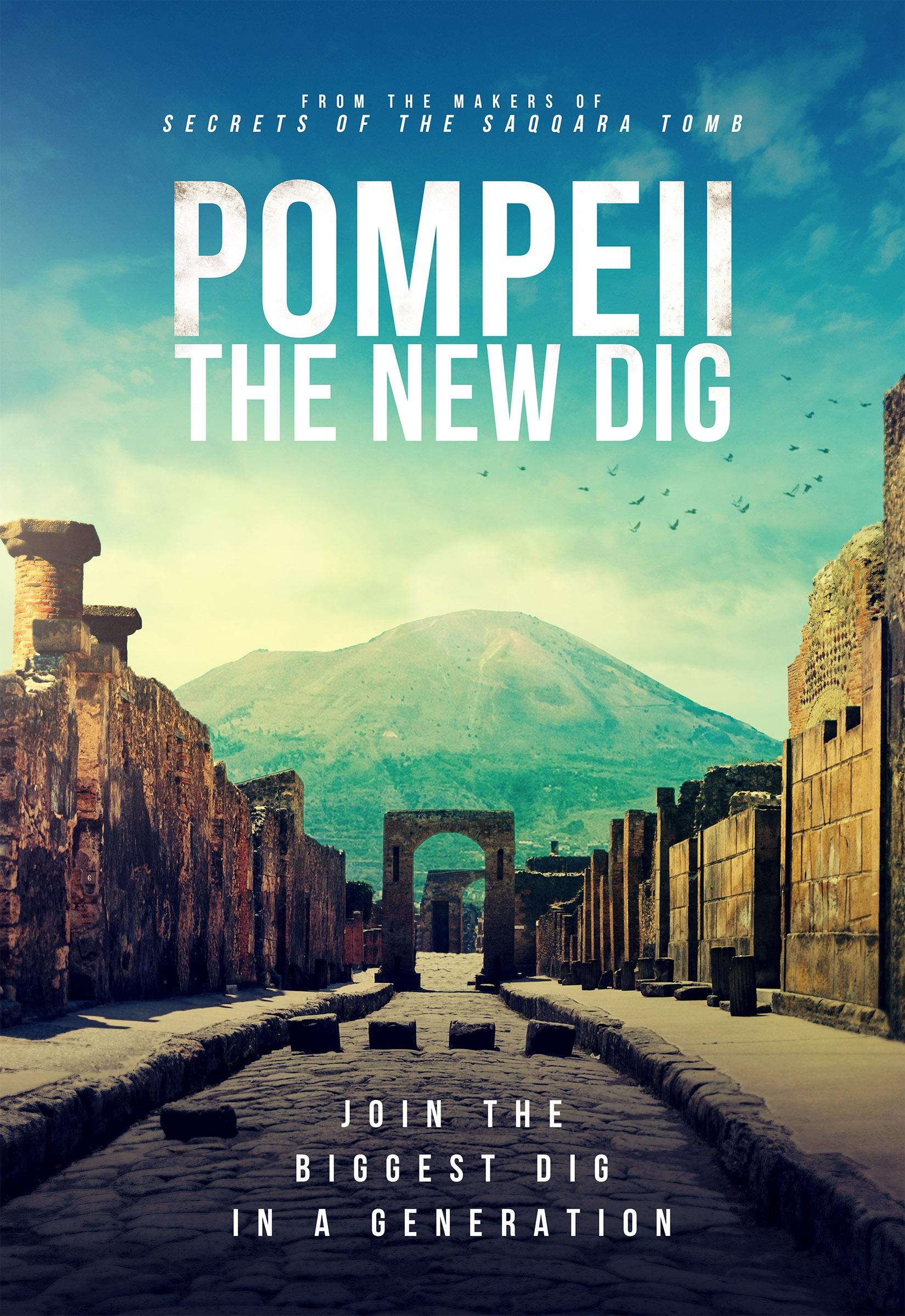
“Pompeii: The New Dig”
Episode 1: “The Bodies”
The excavation begins with the discovery of a large brick-built oven. It begins as a mystery, as it is too big to be just for a private residence. However, further investigations reveal it was part of a thriving commercial bakery.
Episode 2: “Escape”
The dig continues, and the all-Italian team of archaeologists discover the remains of a horse harness. As they cannot find any remains of the horse, they wonder if it managed to escape Pompeii as the eruption began.
Episode 3: “The Final Hours”
The archaeologists complete the excavation of a wealthy residence, a bakery, and a laundry and, in doing so, discover evidence of what people were doing in the city during its final hours.
Season 2 (2025):
Episode 1: “House of Treasures”
At Pompeii, Italian archaeologists complete the biggest dig in a generation, where they strike gold and luxury in one of Pompeii’s richest homes.
Episode 2: “House of Treasures”
At Pompeii, Italian archaeologists complete the biggest dig in a generation, where they strike gold and luxury in one of Pompeii’s richest homes.
There some overlap of material and experts between “Pompeii: The New Dig” and “Pompeii: Out of Time with Tom Hiddleston.” The BBC/PBS documentary is about discovery and the scientists behind it. The National Geographic documentary with Tom Hiddleston tries to give us visuals to bring us closer to the catastrophic events and give us some answers. Both give us new information about Pompeii, but the National Geographic documentary tries to make us see Pompeii more in terms of survivors and how we can relate to the event in today’s world.
The Experts
Dr. Ludovica Alesse: Restorer at Pompeii
Valeria Amoretti
Chiara Comegna: Archeobotanist
Chiara Corbino: Archeozoologist at Pompeii
Dr. Kevin Dicus of the University of Oregon
- Archaeologist
- Associate Professor of Classics
- Head of Humanities Program
Dr. Domenico Esposito
- Classical archaeologist
- Specialist in wall painting
- Pompeii: Bathing Culture and the Development of Urban Space
Emanuela Faenza: Restorer
Miko Flore: Archaeologist, fullery expert
Valentino Gasparini: Archaeologist, expert on Roman religion
Professor Chris Jackson of University of Manchester
- British volcanologist and geoscientist
- BBC/PBS “Pompeii: The New Dig”
Alexander Mariotti: Historian
Dr. Nicolas Monteil of the University of Rouen
- Expert on Ancient Roman bakeries
Gilberto Pagani: Excavation specialist
Ann C. Pizzorusso: Art historian
Roberta Prisco: Restorer at Pompeii
Giovanni Ricci: Archaeologist
Alessandro Russo: Archaeologist in Pompeii
Dr. Luca Salvatori: Archaeologist
Michele Stefanile: Underwater archaeologist
Ausilia Trapani: Archaeologist
Steven Tuck: Archaeologist at Miami University
Gabriel Zuchtriegel: Director of the Pompeii site
“Pompei: The New Dig” is drier and more serious than the National Geographic documentary “Pompeii: Out of Time with Tom Hiddleston.” It doesn’t feature recreations, but reality, and it introduces fields of specialization that I didn’t know existed. “Pompei: The New Dig” available to screen on PBS (subscription), Amazon Prime Video (subscription add-on), and Apple TV ($1.99).