
Sex sells and women have been selling their bodies and souls for ages, even if it isn’t actual sex work. “The Last Show Girl” is about a woman who has devoted her life to sin city’s glamorous nudie show and affords Pamela Anderson a fully-fleshed out role that touches on relatable issues. “The Substance” follows Demi Moore’s desperate has-been fitness star as she grabs at the fountain of youth with horrific consequences.
Both Anderson and Moore were pin-up girls and actresses. Anderson excited heterosexual male libidos with her slo-mo red one-piece as a lifeguard in “Baywatch.” Moore infamously posed for tasteful nudes (in 1991 while seven months pregnant and again in 1992 with body painting by Joanne Gair, both for Vanity Fair), when she was pregnant and when she wasn’t. Yet as they aged, the roles became fewer and their lifestyles and relationships fueled more copy than their actual acting roles. Both of these films show that is at least partially due to the poverty of imagination in an industry run by men and the heterosexual male gaze.
The Substance
“The Substance” is a body horror flick written, directed, co-edited and co-produced by French filmmaker Coralie Fargeat. Target’s debut feature was a rape revenge film aptly named “Revenge.” Imagine is this film had been made after the trial Dominique Pelicot. Gisèle Pelicot became an international heroine after learning her husband had allowed at least 70 male strangers to sexually assault her while she was drugged.
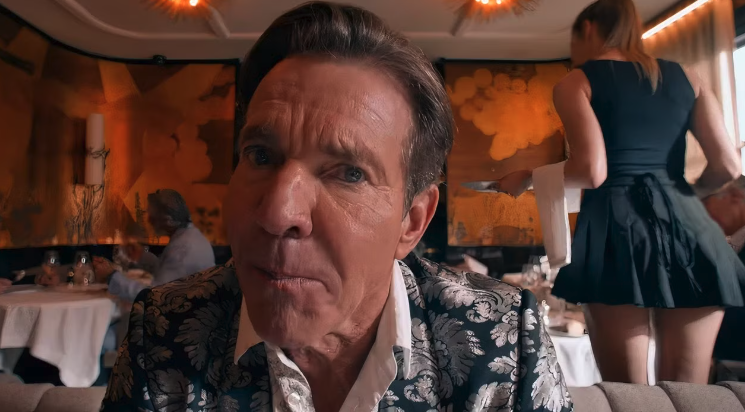
Demi Moore, 62, plays Elisabeth Sparkle, a 50-year-old Hollywood film star who has just been dismissed from her long-running aerobics TV show by the producer, a luridly grotesque Harvey (Dennis Quaid). She’s too old, even if Harvey is the same age or older (Quaid is 70). As she drives home, still stunned by her job loss, she’s distracted by the sight of a billboard of herself being taken down and becomes involved in a traffic accident. At the hospital, a nurse slips her a flash drive which introduces Elisabeth to “The Substance,” a black market serum which can make a “younger, more beautiful, more perfect” version of herself.
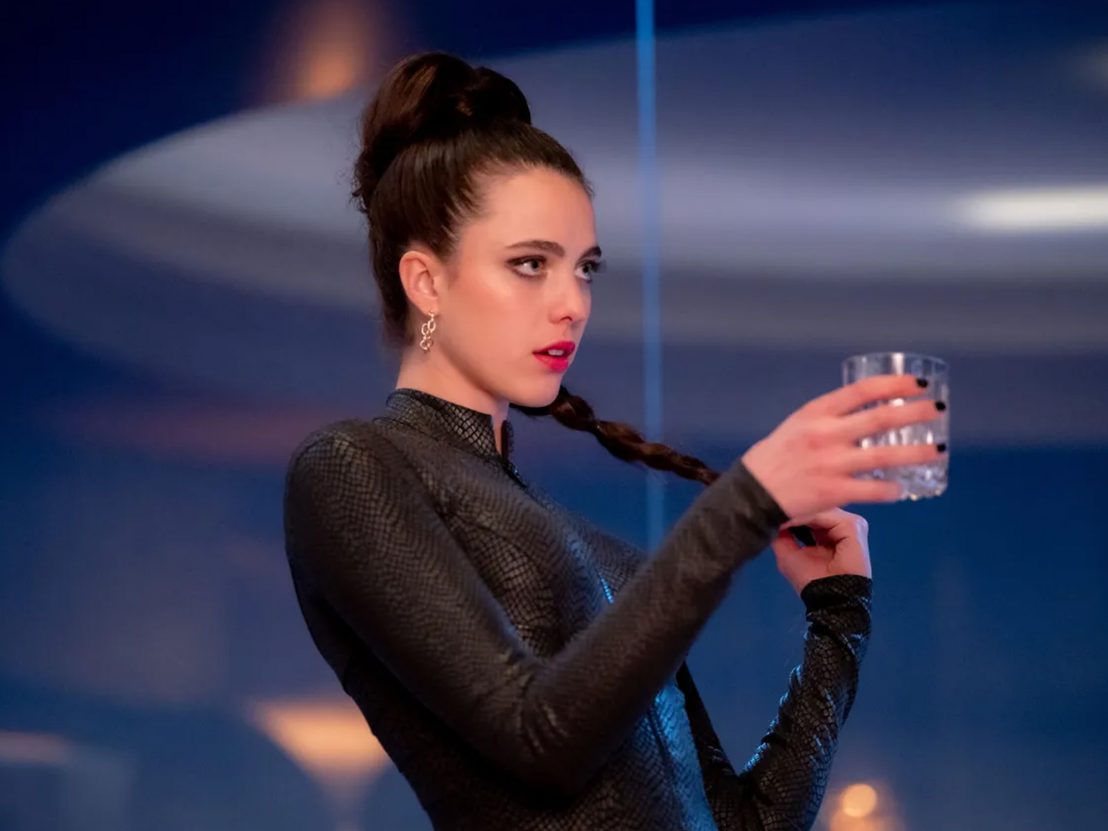
Elisabeth orders The Substance and receives a single-use activator serum, but the serum comes with some conditions. First, it causes her body to generate a younger version of herself that emerges from a slit down her back. The shedded older body lays helpless and inert, but must be fed intravenously. Daily injections of a stabilizer fluid extracted from the original body are necessary to maintain the new younger body, who is named Sue (Margaret Qualley). The two bodies much switch consciousness every seven days. So for seven days, Elisabeth lives as the younger Sue while her unconscious original body must be fed and protected by Sue and for seven days, Sue must allow Elisabeth to switch back places.
Sue is young and selfish and with Elisabeth’s knowledge, she becomes Elisabeth’s replacement on the TV show. Sue enjoys her life too much and is a little late in the switch one week, causing one of Elisabeth’s fingers to rapidly age by decades, becoming gnarled and deformed and covered with dark age spots. 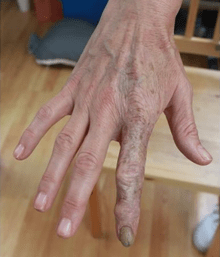 Elisabeth learns there is no way to correct this disfigurement yet Sue remains unaffected. They begin to view themselves separately despite their co-dependency. Eventually, Sue refuses to switch back until a crucial New Year’s Eve telecast when she runs out of stabilizer fluid. Once she contacts the supplier, she learns that she must switch back. Yet because of the delay, Elisabeth has aged as to be completely unrecognizable. Elisabeth must decide if she will end her dual existence or continue sharing life with this selfish other.
Working with Scottish cinematographer Benjamin Kračun (“Promising Young Woman,” 2020), Fargeat has it both ways. She acknowledges the male gaze, but heightens it, making it a leering, obsessive fascination with body parts. The objectification is repetitive and repellent although, no doubt, it will appeal to some heterosexual men. Then lensing and lighting plus makeup make Quaid seem like a human caricature, oozing sleezy desire like a sweaty pig waiting for dinner. On the menu is every young, beautiful girl desperate to be famous.
 Horror is not a genre that I particularly enjoy, but even still, “The Substance” has very visually potent commentary about women in a men’s world. “The Substance” had its world premiere on 19 May 2024 at the Cannes Film Festival and Forget won Best Screenplay. The film was released by Mubi on 20 September 2024 in the US. It has five Oscar nominations.
The Last Showgirl
“The Last Showgirl” illustrates the great temptation of being a worshipped and admired for one’s youthful physical beauty. Women are not like objects of art, accruing value as they age and Shelly Gardner (Pamela Anderson) has been performing for 30 years as a showgirl at a Las Vegas “French” revue in Las Vegas, Le Razzle Dazzle (modeled after the “Jubilee!” show that closed in 2016).
Shelly was featured on the brochure and gave up a chance at marriage and even a good mother-daughter relationship to remain in the show. Yet at 57, she is more a mother figure than a main attraction and relegated to the back row. She remains in contact with a former co-worker, Annette (Jamie Lee Curtis), who now works as a cocktail waitress.
The show’s producer, Eddie (Dave Bautista), informs Shelly and her co-worker friends Mary-Anne (Brenda Song) and Jodie (Kieran Shipka) that the show will be closing forever in two weeks due to declining popularity. A Neo-burlesque circus variety show that has already taken up the heavy traffic nights will be expanding and completely take over the stage.
Shelly feels that although the revue is a “nudie show,” because of the elaborate costumes and posing and preening (as opposed to explicit suggestiveness), the other show is obscenely low class. Mary-Anne and Jodie begin auditioning for other shows and we see Shelly at the very beginning of the film, auditioning. Yet Shelly, unlike Mary-Anne and Jodie who are thinking of their futures, is thinking about her past, particularly her daughter Hannah.
While the women are scrambling Eddie will continue on somehow backstage. Shelly tells Eddie, “You’ll be just fine, but I just have to disappear.” He’ll be able to make rent and eventually retired, but women like Shelly and Annette may have nothing left but their memories. 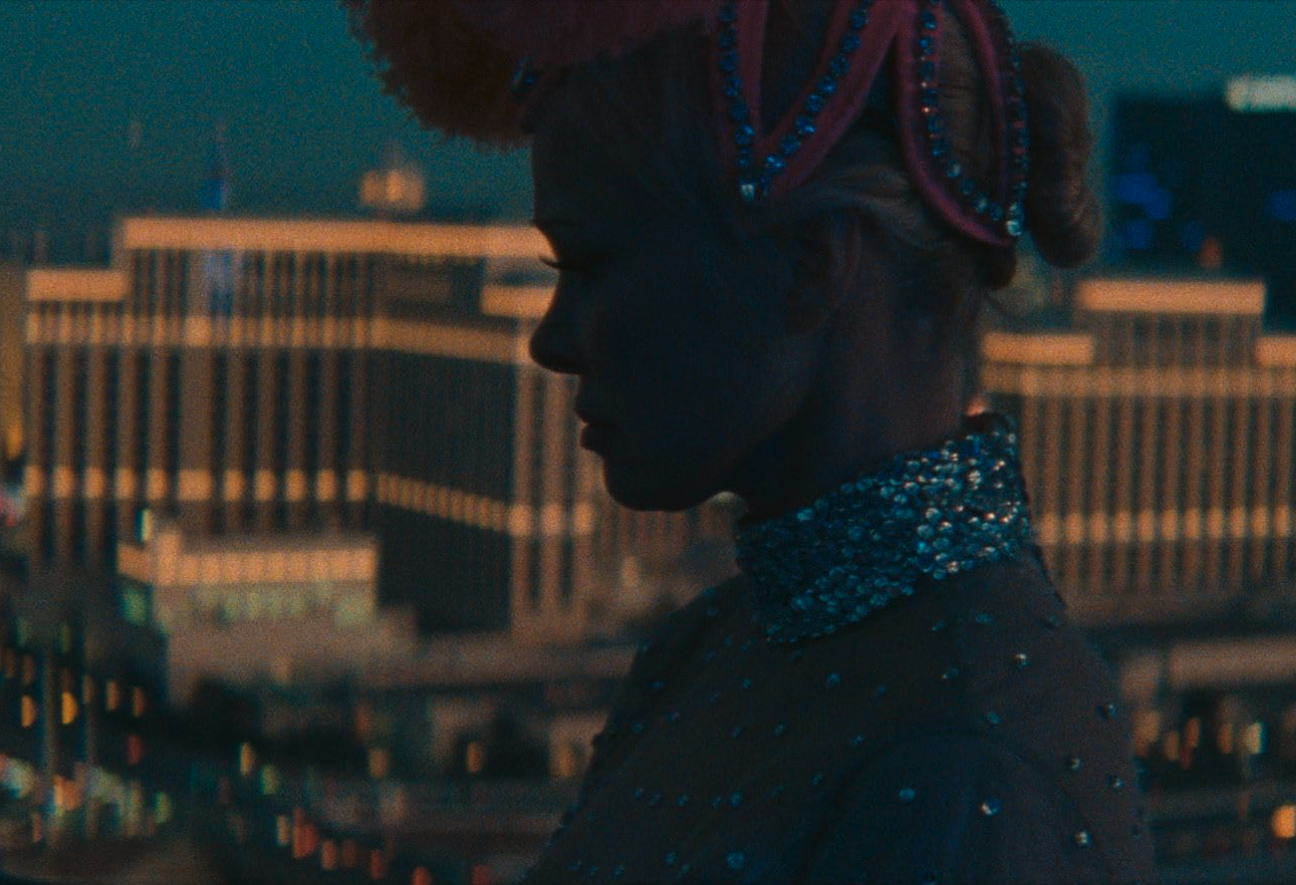
Director Gia Coppola (“Palo Alto,” 2013) elicits a nuanced performances from all the actors, especially Pamela Anderson whose Shelly seems small and almost disappears without her showgirl costume and theatrical makeup. Kate Gersten’s (“The Good Place”) script wisely doesn’t allow us to see Shelly performing on stage until the film is nearly over. Before that, we hear what her college-age daughter thinks.
Hannah says, “It’s kind of just a stupid nudie show.”
Shelly is defensive, saying, “Well, it’s a spectacle of dancing nudes, but it’s certainly not a nudie show.”
Hannah, however, feels differently, replying bitterly, “I wanted to know it was worth it. That it was better than me after all. That you didn’t put this lame trash above me.” Particularly now that Shelly is past her prime. Hannah describes what we don’t ever see, “You’re in the goddam back of 80 topless dancers.”
The film doesn’t give us a moment to make that judgment for ourselves. We never see 80 topless dancers, just the scrambling backstage as the women get ready, dress and undress. Help each other and refuse to. While one expects that the gaudy costumes and stage makeup look better from a distance and under theater lights, what we see isn’t the airbrushed perfection of “Anora.” There’s something slightly tawdry in the nudity here. The costumes look old and sweat-worn rather than new or sophisticated.
 Yet these were
 women, presented on a pedestal three decades before, but in today’s world, with online porn and R-rated films in your home, that pedestal doesn’t exist. The impact of this glamorous nudie show has been lost. And the line between high-class and low-class nudie show is narrower now, perhaps only defined by the venue and the customers bankroll.
“The Last Showgirl” premiered at the Toronto International Film Festival on 6 September 2024. It was given limited release in the US on 13 December 2024.
In both “The Substance” and “The Last Showgirl,” female directors take on the bitterness of female aging out of their marketability. All of which is made more pointed by the reflection of resurgence of Jane Fonda who was an actress and then an exercise guru in the 1980s before becoming once again a notable actress. If you’re not familiar with Jane Fonda, some of the layers of “The Substance” and “The Last Showgirl” will be lost.
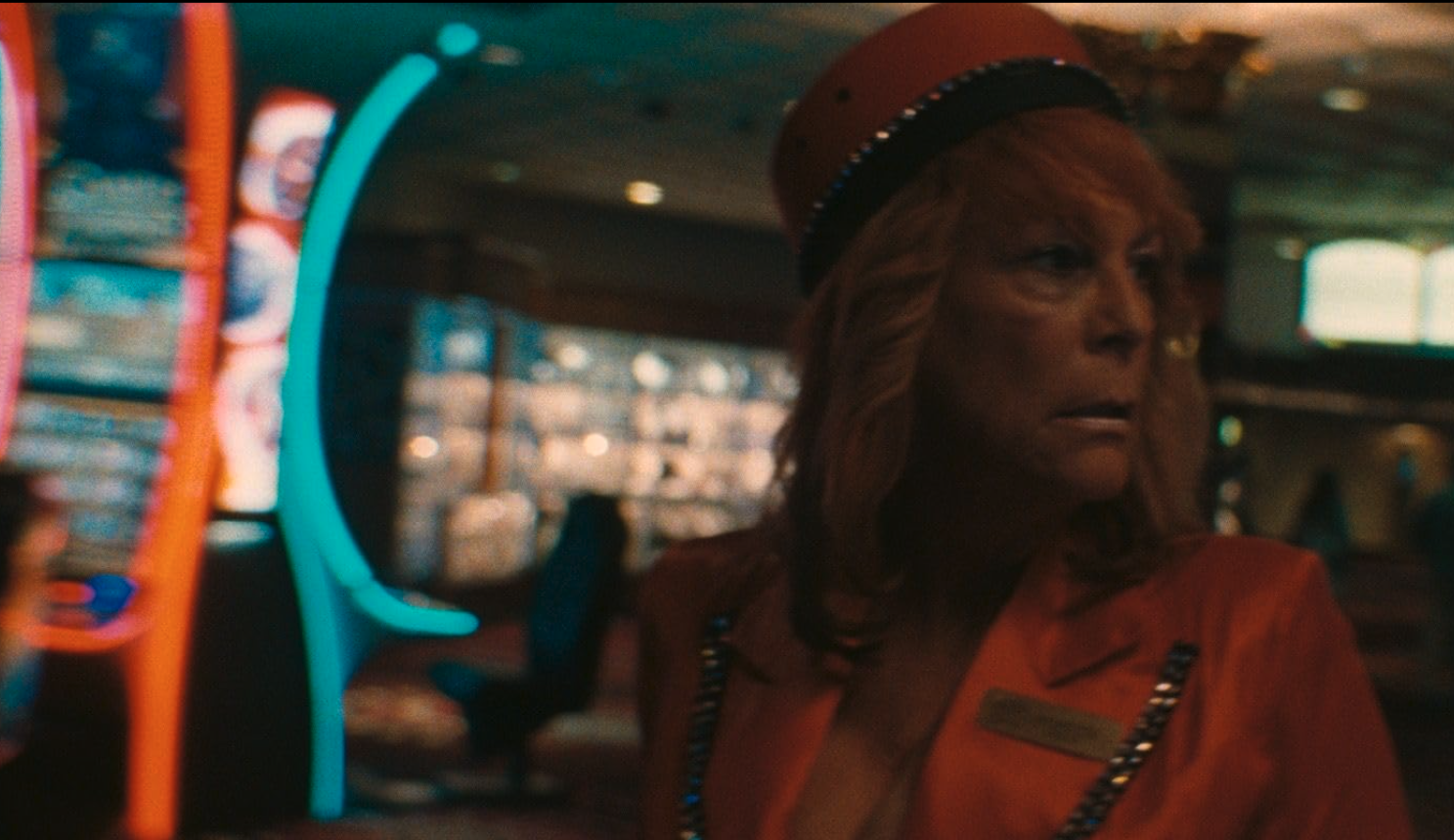 There’s a moment when Jamie Lee Curtis’ Annette, frustrated that she’s getting shorter hours in favor of younger cocktail waitresses, gets drunk and begins dancing. People who have followed Jamie Lee Curtis’ career will remember her in her striptease dance sequence in the 1994 action comedy film “True Lies” or as a fitness instructor in the 1985 film “Perfect.” In the 1980s, it might have been hard to imagine Curtis as the grouchy IRS inspector Deirdre in “Everything Everywhere All at Once.” Curtis, appearing with outdated white-frosted eye shadow and an unflattering cocktail waitress uniform is unflinchingly brave in her portrayal of Shelly’s potential future.

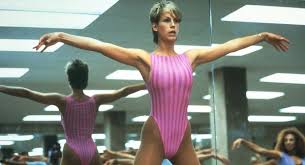
In the 1980s, Demi Moore was in her first marriage and in a soap opera (“General Hospital”). In 1985, she gained recognition and membership in the Brat Pack with “St. Elmo’s Fire” and followed that up with the romantic comedy “About Last Night…” with Rob Lowe. In 1990, Moore starred opposite Patrick Swayze in the supernatural romance “Ghost.”
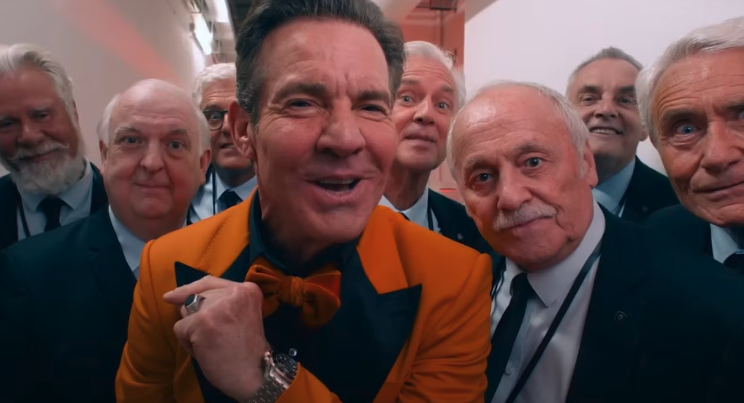
These two films show that the rise of female directors and screenwriters can both challenge and balance out the male gaze that has dominated the film industry as well as provide better roles for women, including female actors who at a certain age become part of the diversity equation. So while both films star a White female actress, both films represent diversity within the film industry.
According to Nielsen.com:
When it comes to representation on TV, Gracenote Inclusion Analytics show that men are on-screen more than women (62% screen time vs. 38%), even though women make up more than half of the U.S. population. But for women over age 50, who represent 20% of the population, the share of time on-screen plummets to just 8%. Forward-thinking content creators and brands know that must change.
Diversity is more than Black or African American representation and both these films bring the woman-over-50 diversity and concerns about the sexism of ageism to the screen in a meaningful way. Both are rated R: “The Substance”
 Age of the Geek