
Thinking about “Oppenheimer” and its total erasure of Asian Americans, I remembered two obvious points: One about the allusion to one culture without any curiosity about its descendants and about geographical proximity to Japanese American history.
- ‘Oppenheimer’ and the Communist Connection
- ‘Oppenheimer’: A Compartmentalized White-Jewish Male POV ⭐️⭐️
Santa Anita Racetrack Becomes a Concentration Camp

Santa Anita Racetrack is about six miles away from Caltech, the Southern California educational institute where J. Robert Oppenheimer was an assistant professor in theoretical physics from 1930.
According to Calisphere.org, Oppenheimer “committed back and forth between Berkeley and Pasadena throughout the 1930s and early 1940s.” He would spend one term each year on the Caltech campus and in 1938, he became a full professor. From 1944 to 1945, he “was on leave to the Manhattan Project at Los Alamos.” According to Britannica, while Oppenheimer was “instructed to establish and administer a laboratory to carry out” the research into harnessing nuclear energy for military purposes, it was in 1943 that “he chose the plateau of Los Alamos, near Santa Fe, New Mexico.”
Santa Anita Racetrack in Arcadia became a detention facility, a temporary Assembly Center under the administration of the Wartime Civil Control Administration. Opening on 27 March 1942, it closed 27 October 1942. At one point, there were 18,719 people there.
Could one really live and teach in Pasadena and not notice the forced exodus of that many people and not have a comment? In 1940 the population of Pasadena was 81,864. The highest population at Santa Anita Assembly Center was about 4 percent of the Pasadena population but the population of Arcadia in 1940 was 9,122. So at one point in history, the prisoners at Santa Anita Racetrack were over double the population of the city it was in. And that went unnoticed by Oppenheimer at Caltech, even as fellow physicist (Robert Millikan) and a former friend of Oppenheimer’s (Linus Pauling) were working to better the situation of some internees? Or that’s what the film “Oppenheimer” would have you believe.
To give one perspective, according to the Holocaust Encyclopedia, the Jewish population in Germany at the time of the 1933 Census was less than 0.75 percent. The largest Jewish population was in Berlin and represented less than 4 percent of the city’s entire population. In Austria, the Jewish population was about 4 percent in 1938, but in Vienna, where the majority of Austrian Jews lived, the demographics were higher–9 percent.
According to ArcSouthPasadena.org, in the 1920s and 1930s, South Pasadena had a sizable Japanese American population. There was a Japanese American Center and school. Ten miles away from Caltech, is Little Tokyo and that area was emptied out as its residents were interned. Pasadena had driven out the Chinese in 1885.
- Historian Matt Hormann To Discuss Hidden Early History Of Pasadena’s Chinatown (28 April 2016)
- Pasadena: The No Place Project
Arcadia is now 56.9 percent Asian. Pasadena is now 18 percent Asian.
Of course, it is an artistic choice to not mention the Asian Americans in California in the film, but it would seem impossible to understand the implications of the atomic bombs without understanding the racism the US had toward Japan and other East Asians before Pearl Harbor, especially during the 1920s, when the film begins.
Evidence of Asians, But No Asians
One of the controversial scenes in the film is about Hinduism. In the film, Oppenheimer quotes a Hindu sacred text, the “Bhagavad Gita,” saying “Now I Am Become Death, the destroyer of worlds.”
- ‘Now I Am Become Death, the Destroyer of Worlds.’ The Story of Oppenheimer’s Infamous Quote (21 July 2023)
-
How Hinduism guided J Robert Oppenheimer’s life and work (25 July 2023)
- Oppenheimer often used Sanskrit verses, and the Bhagavad Gita was special for him − but not in the way Christopher Nolan’s film depicts it (16 August 2023)
Oppenheimer was born into a Jewish family, but if he was supposedly influenced by Hinduism, where are the Hindus in the film?
I ask this because last week I remembered that two very historically important Asian Indian American men had California connections at about the same time period as covered in the film “Oppenheimer” : Bhagat Singh Thind and his attorney SG Pandit.
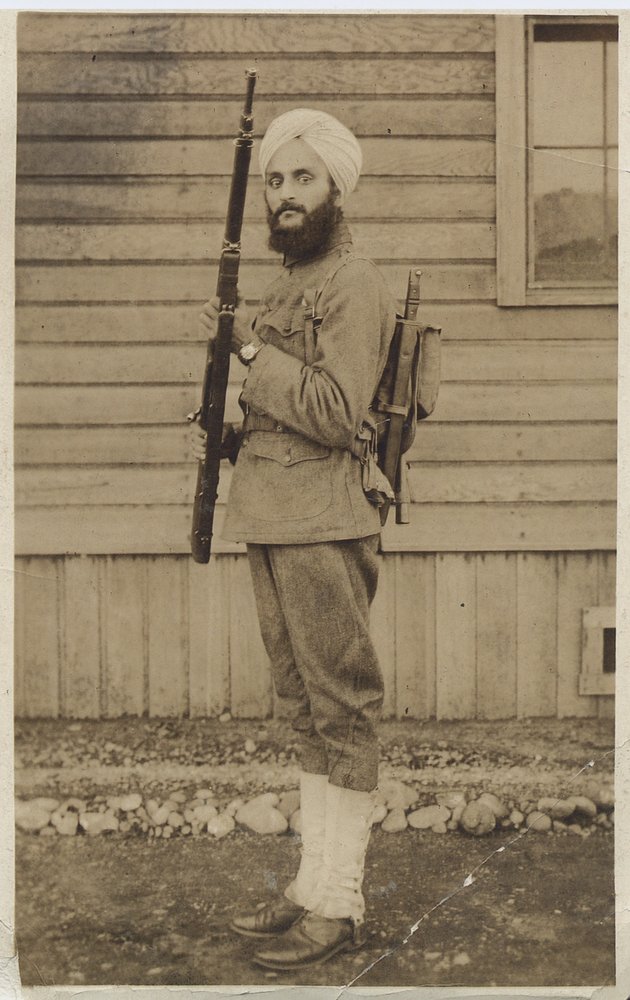
According to ImmigrationHistory.org, the Thind decision “led to the denaturalization of about fifty Asian Indian Americans who had earlier successfully applied for and received US citizenship.Pandit also almost lost his citizenship, but successfully argued in court to retain it under the doctrine of equitable estoppel.
Thind was at UC Berkeley where he earned his PhD in theology and English literature. Thind was Sikh and died in Los Angeles at the age of 74 in 1967. Pandit who was born into a Gujarati Brahmin (Hindu) family in British India, died in 1959 at the age of 84 in Los Angeles.
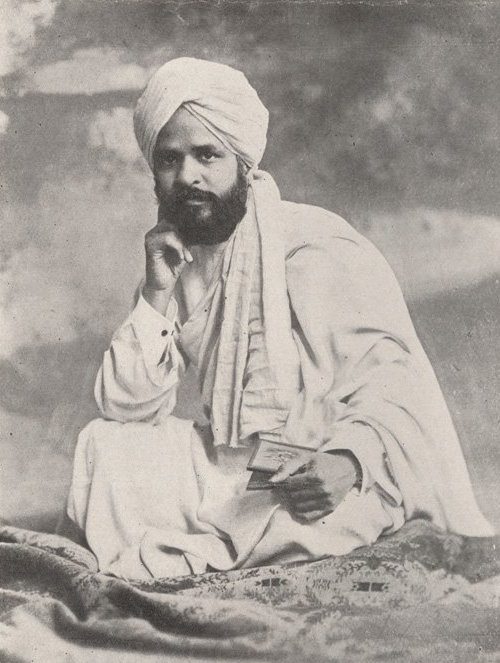
In 1930, Pandit was an executive member of the Los Angeles branch of the All-America Anti-Imperialist League. The League was an international mass organization of Communist International. The organization was replaced by the American League Against War and Fascism.
So as there were people of Japanese descent active in the Communist circles of Northern California, there were people of Asian Indian descent active in the Los Angeles area at the time when Oppenheimer was at UCB and Caltech.
While I could not find an Asian Indian physicist who was part of the Manhattan project, there was an Asian Indian physicist who does connect Oppenheimer to Millikan and provides a testimony to the depth and reach of prejudice against East Asians in the US.
The 1992 autobiography of Piara Singh Gill, “Up Against Odds: Autobiography of an Indian Scientist,” Gill notes that in 1938, he drove to Washington, DC with a Japanese person he found through a notice posted on the bulletin board at the International House (University of Chicago), but along the way, “I was astonished at the discrimination” because “every time the landlady opened the door and looked at my Japanese companion, she told us that there was no vacancy.” As a result, they drove on through the night.
Before this, Gill had been in Southern California where he made the acquaintance of Indologist Hans Nordwin Von Koerber who introduced him to A. Goetz of Caltech. Goetz introduced Gill to Nobel laureate Robert A. Millikan. Millikan had been to India in 1933 for research. Although his initial impression of Millikan was not good because Gill believed him to be “anti-Indian,” in 1948, he had a different impression. Gill attended a symposium to honor Millikan’s 80th birthday and Oppenheimer was one of the people in attendance. This was only three years after the atom bombs were dropped on Hiroshima and Nagasaki.
Making the communist circles in the Bay Area of Northern California and Berkeley White and Jewish in the film “Oppenheimer” is problematic because there was a decision made within the Communist organizations within California about the people of Japanese descent. Yet in the Los Angeles Communist circles, it would seem that someone like Pandit would be a celebrity of sorts, particularly to someone interested in Hinduism. Like China, India was an ally of the US during World War II.
- ‘Oppenheimer’ and the Communist Connection
- ‘Oppenheimer’: A Compartmentalized White-Jewish Male POV ⭐️⭐️
Asian Indians held and still hold an interesting position in the US racial landscape. Are they White? Chris Rock thought they were at the Oscars. Are they Black? The protagonist of “Little Black Sambo” was Asian Indian. We know what South Asian Americans have blended into the Black/African American communities.
Neither of these lines in inquiry (Japanese or Asian Indian) answer the question: Why was Oppenheimer interested enough in the Chinese to make a donation as I noted in a previous article. There was a Chinese community and Chinatowns in both San Francisco and Los Angeles. We also know there were at least two people of Chinese descent who studied physics at UCB with one transferring to Caltech. The two were married at Millikan’s home. One of those people, would work on the Manhattan Project.
The question then becomes, how can a scientist who ran in Communist social circles and was at UCB and Caltech and was interested in Hindu sacred texts possibly lead a life so very WASP-ish? Would not some allusion to the forced migration of one ethnic group to places are far as Arkansas and certainly some even imprisoned in New Mexico added to the full understanding of the atomic bombings of Hiroshima and Nagasaki?
In 2019, NPR published a photograph of a Japanese American family in Hayward, California waiting to be relocated. The article isn’t about the Japanese American internment but rather the end of World War I and the Treaty of Versailles.
The feeling at the time was expressed by Democratic California Senator James Phelan:
“Believe western Senators and others will oppose any loophole by which oriental people will possess such equality with white race in United States. It is vital question of self-preservation.”
If we can’t reasonably talk about World War II in Europe without mentioning anti-Semitism or racism toward Jewish people then how can we reasonably discuss World War II in the Pacific without discussing another type of racism that was written into federal and state laws?
In “Oppenheimer,” we know we’re heading toward both Japan and the Bikini Islands (by way of downwinders in the US), and yet the scene hasn’t been set in the film to understand the US and the questions raised by the atomic bombs. The rise of anti-Asian hate in recent years should indicate that the history of anti-Asian sentiments must be put in its historical context.
 Age of the Geek