Perhaps no war haunts the national consciousness more than the Civil War. While now most of the nation venerates the president who saw us through those terrible times, this wasn’t so until after his death. The Civil War did more than change the way we view Abraham Lincoln. It changed the way the average citizen and the military view and treat death. Two exhibits at the Huntington Library–“A Strange and Fearful Interest: Death, Mourning, and Memory in the American Civil War” at the Boone Gallery and “A Just Cause: Voices of the American Civil War” at the West Hall–remind us that the Huntington is one of the finest repositories for Civil War and Lincoln-related materials in the nation.
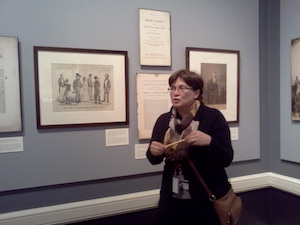
History at the Huntington is fascinating, particularly if you get a chance to hear the curators. Olga Tsapina, Norris Foundation Curator of American Historical Manuscripts at The Huntington has an infectious excitement when she gave journalists a tour of her exhibit. Her eyes light up and in her delightful Russian accented English, she gives us an outsider’s look at American history. There is no North or South, Yankee versus Southern gentility to provoke protest.
Forget the fiction that Hollywood and revisionists have manufactured. The just cause wasn’t a war against slavery. It was a war against secession. As Tsapina reminds us, when Lincoln bid farewell to Ulysses S. Grant, he wrote in a letter “And now with a brave army, and a just cause, may God sustain you.” The letter is the source of the exhibitions title, “A Just Cause: Voices of the American Civil War,” yet Tsapina asks what was the cause that justified “the carnage that would claim the lives of hundreds of thousands of Americans”?
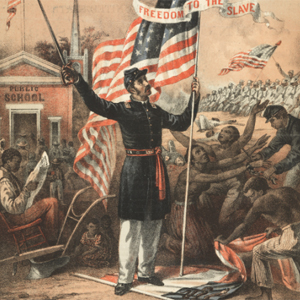
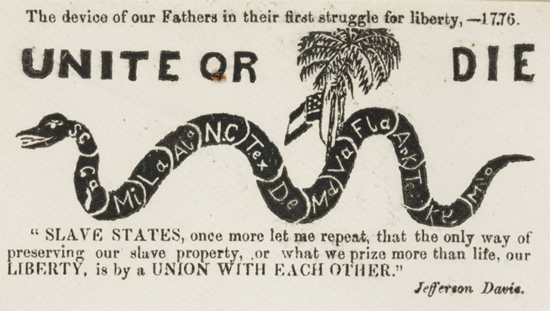
The exhibit presents “all sides of the argument” from what people of that time felt and they weren’t that kind to Lincoln. That means brace yourself because there were people who felt that “slavery was good in America” and “fundamentally different.” Lincoln is mocked and both sides initially felt that God and the Founding Fathers were on their side. After all, some of those men such as Thomas Jefferson, owned slaves.
The display includes some 80 letters, diaries and other writings by Northerners and Southerners, including Abraham Lincoln, Jefferson DAvis, Robert E. Lee, George B. McClellan as well as Union and Confederate soldiers, their family members, clergy, physicians, lawyers and academics.
The view of history as it happens doesn’t always agree with how we evaluate it a century of more later. What we knew then, what we know now and how society has changed has changed our perception of history. This exhibit may give you a different perspective of the news you see now or even inspire you to keep a journal.
If you’re fascinated by the Civil War or just in the mood a little gloomy contemplation on death, the exhibit “A Strange and Fearful Interest: Death, Mourning and Memory in the American Civil War” is just the thing. It’s perfect for Halloween and even has a free but overbooked related lecture on Halloween.
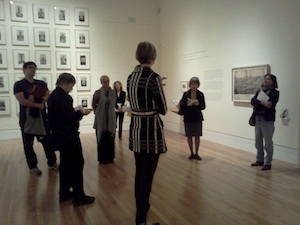
The American Civil War came before there was a standardized protocol for notification of the dead, grave registrations and pensions. According to the curator, with three percent of the population dead as a results, the Civil War changed the perception of death and mourning. Jennifer Watts, curator of photographs at The Huntington and curator of the exhibit explained in a press view that the title comes from a statement made by Oliver Wendell Holmes Sr. in 1863 after seeing photographs of the Antietam. He wrote “The field of photography is extending itself to embrace subjects of strange and sometimes fearful interest.”
While war photography is an accepted field of journalism and a genre of photography, the rise of photography as a means of recording events began in the Civil War. At that time, film was slow and required long exposures. That meant there were no action shots–that was left to the imagination of artists. But the dead, so many of them, were left out in the fields that enterprising photographers could go out and record these horrific still lifes or ghastly landscapes. Newspapers could not yet print photographs, but they could have engravings made from the photographs–artists working to interpret what they saw. To see the actual photographs, one had to attend an exhibit.
Photographs were also taken for loved ones to remember their soldiers and for soldiers to remember their loved ones. And the photographs could also be used to help find soldiers because there was no system of notification of deaths. Imagine getting on a train to search for someone on the battlefields. Images includes a photo commemorating the birthday of Ulysses S. Grant where prominent Confederate and Union commanders met at Gettysburg in 1893 and scrapbook pages recording death by Alexander Gardner from his Antietem series. There’s a wanted poster from the Lincoln assassination and photos depicting the exhibition of Lincoln conspirators.
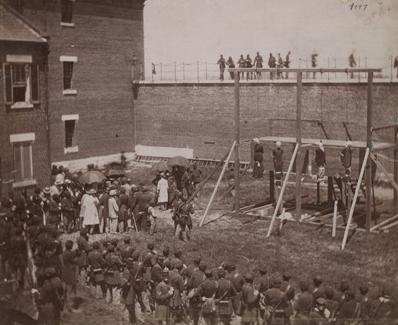
The exhibit itself is organized around three themes: Battlefront, Assassination and Commemoration. You can get a close look at 50 works at two computer kiosks. The exhibit doesn’t stop there. Online you can hear expert commentary from renowned scholars such as David W. Blight (author of “Race and Reunion: The Civil War in the American Memory”) and Pulitzer Prize-winner James M. McPherson (“Battle Cry of Freedom: The Civil War Era”). There’s also a rare recording of Joseph H. Hazelton’s account of Abraham Lincoln’s assassination (April 14, 1865). He was 10 and handing out programs at Ford’s Theatre.
You can also see and hear artist Barret Oliver’s short film about the process of making photographs in the field during the Civil War days.
Curator Jennifer Watts will be giving a private tour of the exhibit of “A Strange and Fearful Interest: Death, Mourning and Memory in the American Civil War”on Dec. 4, 4:30 p.m. to 5:30 p.m.
“A Strange and Fearful Interest: Death, Mourning, and Memory in the American Civil War” continues until January 14, 2013. “A Just Cause: Voices of the American Civil War” continues until January 7, 2013.
For more information about these exhibits visit www.Huntington.org. The Huntington Library, Art Collections, and Botanical Gardens is located at 1151 Oxford Road, San Marino.
 Age of the Geek