Ms. Geek Speaks: More Swastikas Equals Freedom of Religion
Before I went to Japan and learned Japanese, I wasn’t aware that the way most people pronounce my name, “manji,’ translated into this symbol in Japanese, 卍 (卍
Wàn in Mandarin Chinese). Of course, you might argue, it could also be 万字 or another homophone, but the word “manji” is a good thing like Buddhism for the Japanese. In English, we get the word Zen from Japanese Buddhism (Mahayana Buddhist sect).
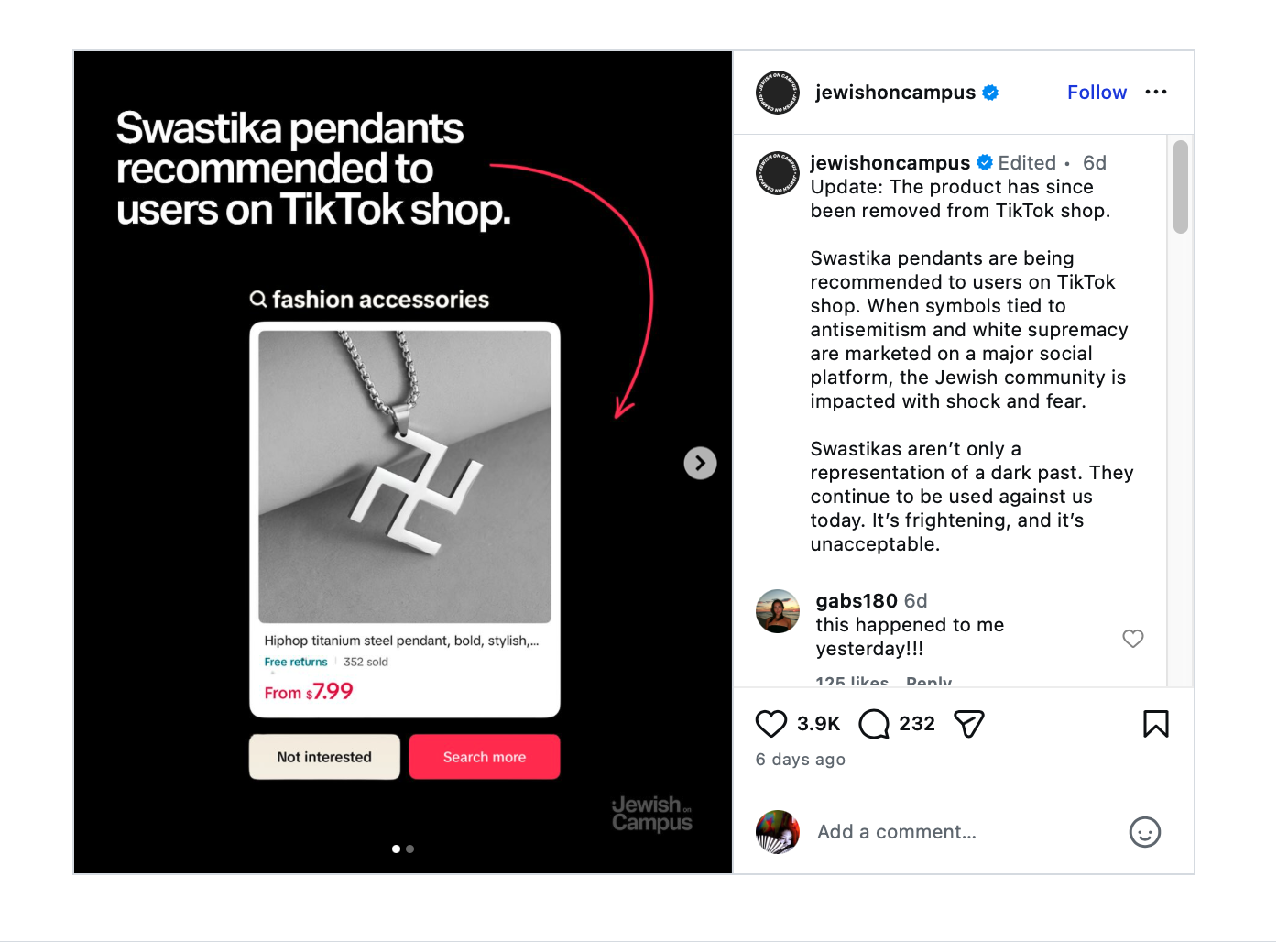
So this month, when people on TikTok,X/Twitter and Instagram made a fuss about a swastika pendant for sale on Amazon, I marveled at the continued Western ignorance and intolerance. My Korean American friend thought that most people knew that the swastika was a holy and generally positive symbol in Asia, but maybe Asian people are still being pressured to behave like a good colony.
Traditionally, the Japanese used a swastika to mark Buddhist temples on maps until recently due to widespread Western ignorance.
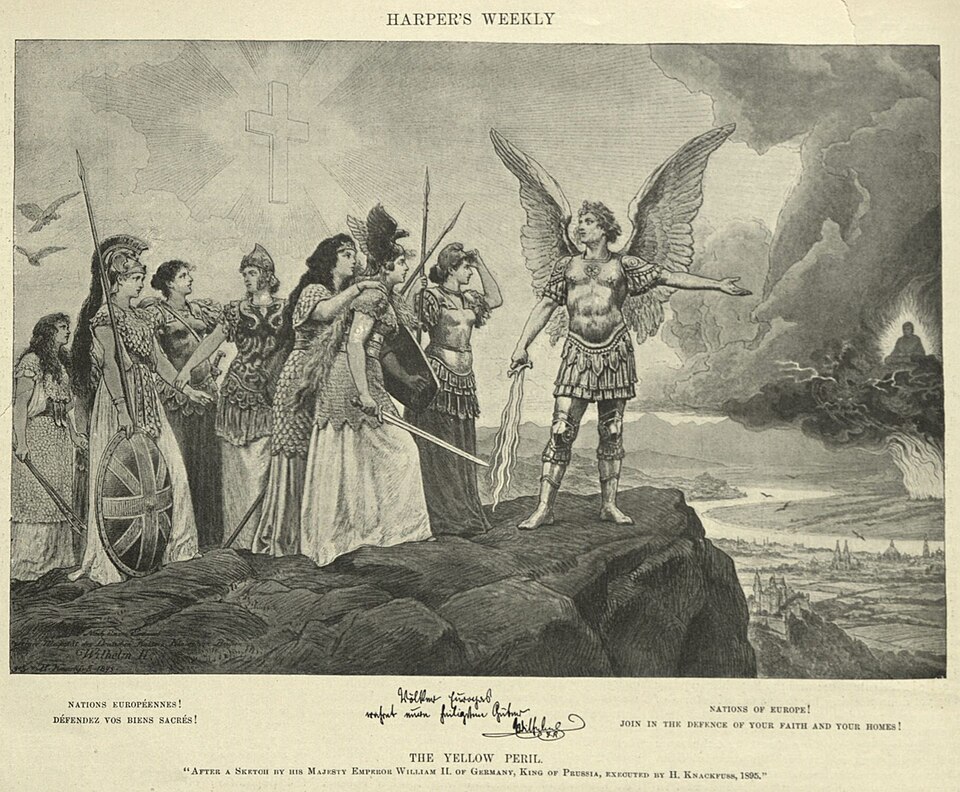
That ignorance is a remnant of anti-Asian sentiments. Look at the infamous illustration from Kaiser Wilhelm II to the Russian Tsar Nicholas II. Known as “Peoples of Europe, Preserve your most sacred goods! (Völker Europas, wahret eure heiligsten Güter!), the picture by Hermann Knackfuß depicts the Archangel Michael surrounded by female personifications of France (Marianne), German (Germania), Russia (Mother Ussia), Austria-Hungary (Austria), Italy (Italia Turrita) and Great Britain (Britannia).
In New Zealand there were warnings against Hindus. In the US, the Asian Indians also faced expulsion.
Asian Indians were considered the Hindo peril or the “Dusky Peril.” And while they might consider themselves “White” according to a SCOTUS decision (US v. Bhagat Singh Thind, 1923), they were not White enough .
Buddha (who was born and lived in India) is shown hovering within dark clouds on the horizon. The Yellow Peril was the pagan Buddhism. The illustration was made in 1895 when Yellow Perilism was already part of the US legal system with the Chinese Exclusion Act of 1882. There would be an additional anti-Asian immigration legislation known as the Johnson-Reed Immigration Act of 1924. The Immigration Act of 1924 banned immigration from Japan and other Asian countries. Canada passed its Chinese Exclusion Act in 1923. Canada also had the Gentlemen’s Agreement of 1908, an informal pact that limited Japanese immigration to male laborers.
The first Buddhist temple in the US was in San Francisco in 1853. The first Hindu temple in the US is probably the Vedanta Society’s Old Temple, also in San Francisco, built in 1906.
The first Buddhist temple in Canada was built in Vancouver, BC in 1905 (or possibly the Tam Kung Temple built in 1876). The first Hindu temple in Canada was opened in 1972, but there was a spiritual center in Toronto before that.
The word “swastika” derives from an Asian language, Sanskrit, and means well being. The Nazi Party adopted a hooked cross in the 1920s. World War II ended in 1945. The connection of Central and Eastern Asian religions with the swastika predates it by thousands of years. The connection is not just older than the Nazi and the European World War II Holocaust, it predates Judaism.
Hinduism began in the Indus Valley Civilization (c. 2300-1500 BCE) That makes it and Zoroaster older than Judaism. Other older religion like Jainism, also an Indian religion, use the swastika. Buddhism was founded in the 6th or 5th centuries BCE. So while Jainism and Buddhism are not older than Judaism, they are certainly older than Nazism and the hooked cross.
historically it was easy to ignore Hindus and Buddhists because in the 1930s, when Hitler and the Nazis were coming into power, the US and other countries had laws against Asians such as the Chinese Exclusion Act of 1882 and the Johnson-Reed Immigration Act of 1924.
India and China were US and UK allies during World War II and yet it was only because of WWII that the Immigration Act of 1924 was rescinded.
In recent years, there has been recognition of Hindus and the connection of their religion with the swastika.
“These faiths’ sacred symbol (the Swastika) has been wrongfully associated with the Nazi Reich,” said Richard Robertson, B’nai Brith Canada’s Director of Research and Advocacy. “We must not allow the continued conflation of this symbol of peace with an icon of hate.”…“It is a historical injustice that the meaning of the Swastika has been wrongfully maligned by reference to the Nazis,” Robertson said after in-depth discussions with representatives of the Buddhist, Hindu and Jain communities, as well as historians. “With our petition, B’nai Brith Canada aims not only to protect vulnerable communities from hate, but also to help the public differentiate between the sacred Swastika and vile Nazi iconography.”
In the United States, there have been similar events and discussions about the swastika.
“ADL has historically had a dual mission,” Kosai said. “To stop defamation of the Jewish people and to secure justice for everyone. Those are equally important. In being a good ally and working together with other faiths, it’s important that [ADL] is inclusive, compassionate, thoughtful and supportive. The last thing we want to do as an organization is to create more misunderstandings or bias against other communities.”
As such according to the JWeekly.com 2022 article, the Anti-Defamation League “strongly supports the right to display a swastika.”
This isn’t new and so people have had plenty of time to become informed. A New York City-based Japanese monk, Rev. Kenjitsu Nakagaki, has been regularly discussing the significance of the swastika.
There are more Hindus in the world population than Jewish people, about 15% of the world population (compared to 31% Christian and 25% Islam). Buddhists about about 4 %. The Jewish world population (according to the Pew Research Center) is about 0.2%. The percentage of the Hindus and the Buddhists combined is 19% or almost 1/5 of the world population.
Islam which also accounts for about 1/5 of the world population also has associations with the swastika.
The KiMo was designed and built in 1927 using the style and designs that were very common to several Native American cultures in the American southwest at that time.
Now on the National Register of Historic Places, the design elements of the KiMo Theatre are preserved for their original cultural significance.
KiMo Theatre in Albuquerque, NM.
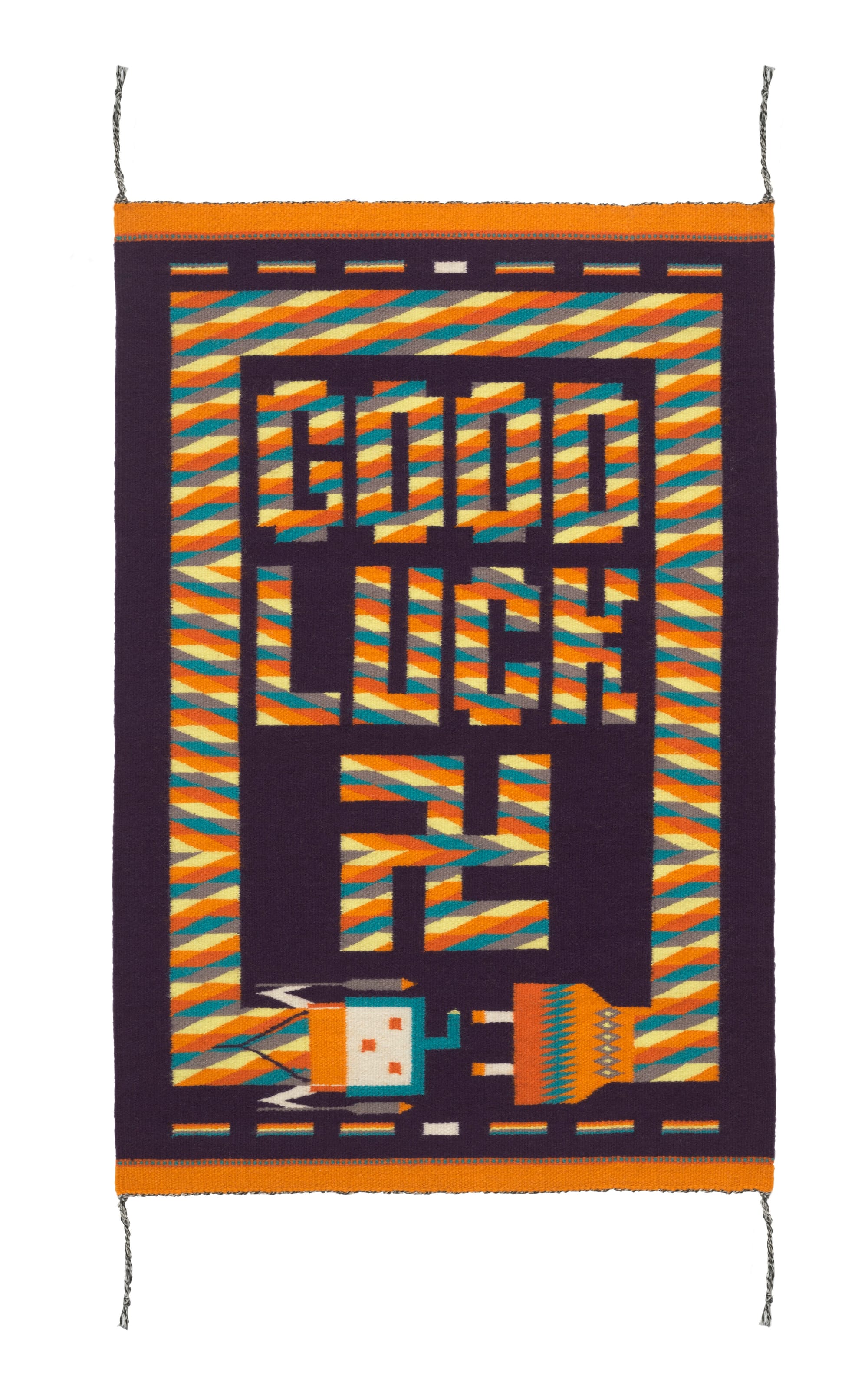
Native American artists are also reclaiming the Whirling Logs symbol.
If the Anti-Defamation League can recognize the right of other religions to display the swastika, why are others claiming that the selling of a swastika is anti-Semitic even when the Hindu or Buddhist (or Native American) connection is explained or if the manufacturer is from Asia?
Melissa Cody (Diné), “Good Luck” (2014),
This 2015 article shows where you can find swastikas, including in South Korea and Japan.
 Before I went to Japan and learned Japanese, I wasn’t aware that the way most people pronounce my name, “manji,’ translated into this symbol in Japanese, 卍 (卍
 In 1907, Bellingham, WA, Indian migrant workers were expelled via mob violence.


 Age of the Geek