
At intermission, there was a long line for the restroom, for the men, but not the women. That should tell you something about the allure of Akira Kurosawa’s black-and-white classic “Seven Samurai” or Shichinin no Samurai (七人の侍). Unable to find the master negative, Toho Company used a duplicate for the 4K restoration which will be released on Friday, 12 July 2024 at the Laemmle Royal in Los Angeles.
After watching the 4K restoration, I came home and watched the film online. The online version shows definite wear. Some scenes seem a bit grey and others have signs of wear with a linen-like patterning. The 4K restoration isn’t totally successful. There were scenes where a double blurry red outline could be seen, making one doubt one’s vision. My eyes have always been bad and my husband’s are getting worse with age, but we both noticed this problem during our discussion after the screening.
If you’ve seen this film before in a theater or even on the television, it’s still worth seeing to fully appreciate the lighting and cinematography and the beauty of black-and-white film and photography. In the US, you might have also really viewed the US cut and missed the full story. The original US cut (which came out under the title “The Magnificent Seven”) was only 158 minutes long. The Japanese original is 207 minutes long and that’s a 50 minute difference. If you saw it in a theater and it didn’t have an intermission, watch it again.
 “Seven Samurai” is a literal translation of the Japanese title, but it lacks some cultural context. In the US, the number seven is considered lucky. In Japan, it is the opposite: Seven is a number associated with bad luck. I discuss this further in a section below about the seven samurai.
The credits that precede the action on the screen already set up the topsy-turvy nature of the Sengoku period (戦国時代). The “sen” means “war” and “goku” (koku) means country. The Sengoku Period begins in the 15th century and doesn’t end until 1615.
The film takes place in 1586. By that time, Ming China had suspended diplomatic and trade relations with Japan due to the civil unrest (1523). The Portuguese had landed in Tanegashima in 1543 and introduced firearms to Japan (arquebus). By 1580, Oda Nobunaga had unified central Japan but Nobunaga was assassinated in 1582. Hideyoshi Toyotomi is on the rise and he will eventually unify the country in 1590. Toyotomi would introduce a system of taxation, kokudaka 石高, that would depend upon rice yield (1582-1596). In 1591, samurai would not be allowed to take up farming and daimyo could not employ any samurai who had left his master. Toyotomi will launch invasions of Korea (1592-1598, but will be dead by 1598. By 1603, Tokugawa Ieyasu will unify Japan and establish the Tokugawa shogunate.
The film takes place during the time of Toyotomi Hideyoshi who came from a peasant background. He was a retainer of Oda Nobunaga.
The Plot
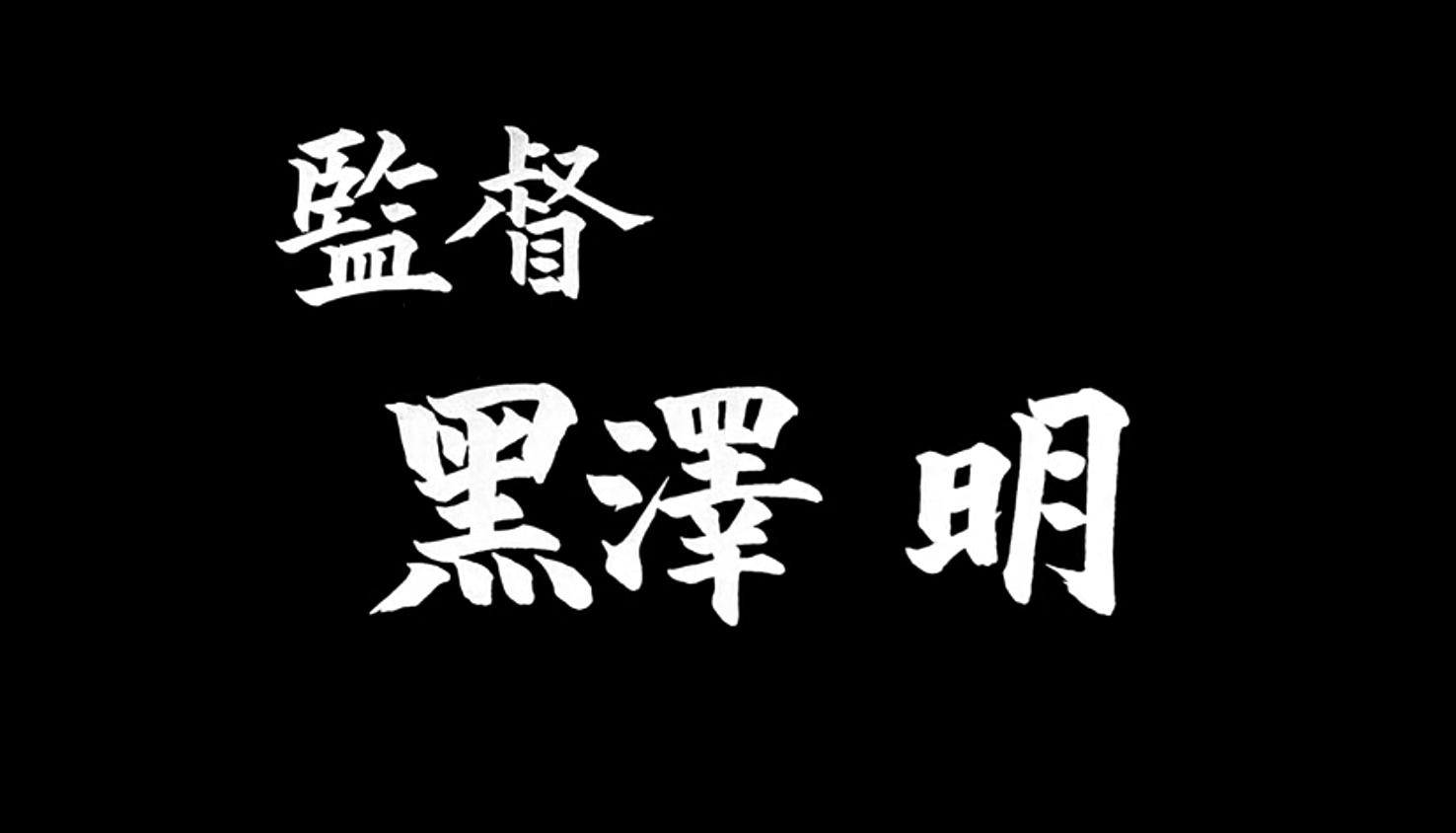
The unsettled nature and chaos of the time, when a servant was rising to become a master, is suggested in the film from the beginning. Instead of being aligned, the names are displayed vertically in bold lettering, with the rows parallel but slightly askew.
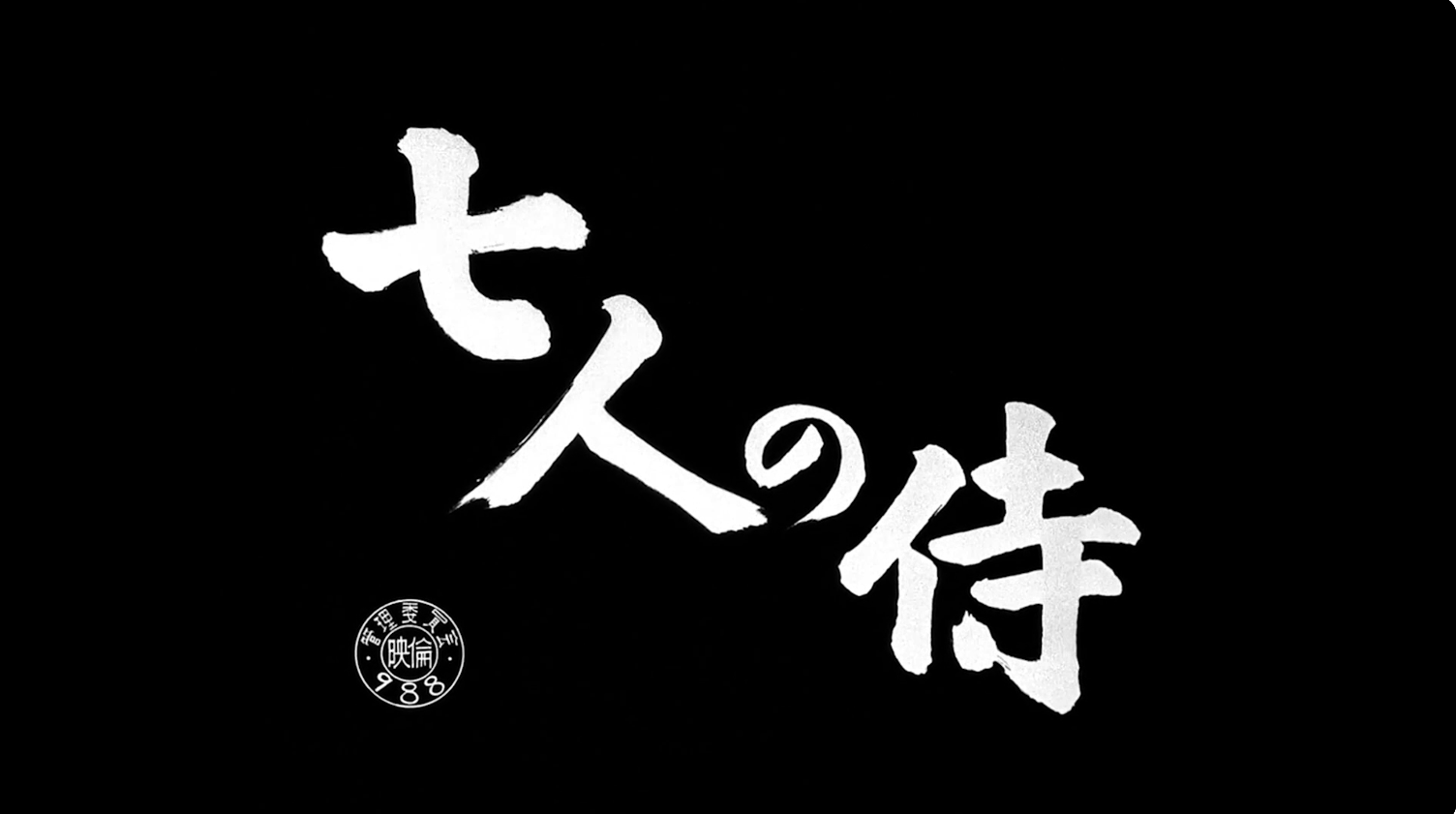
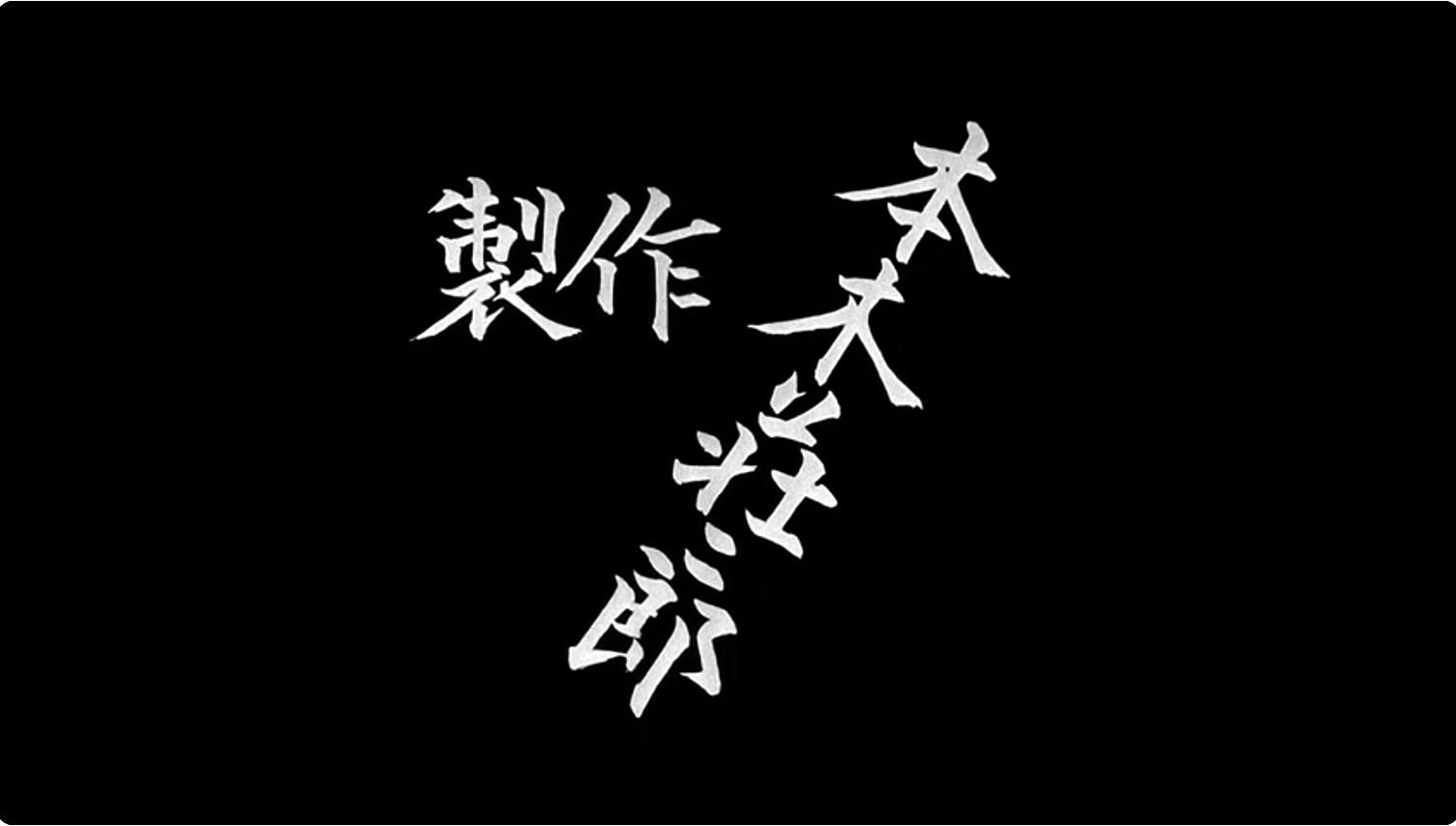
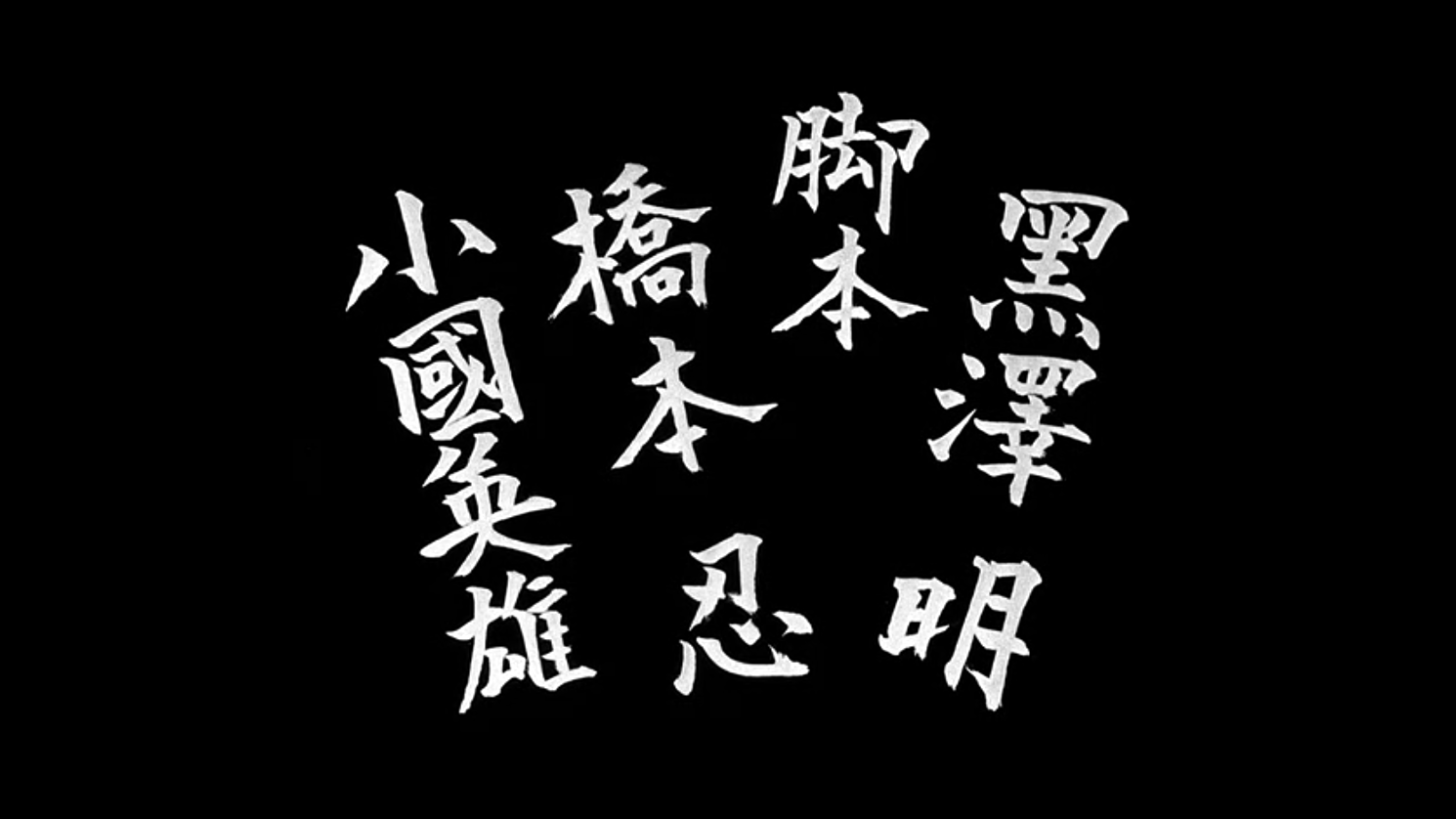
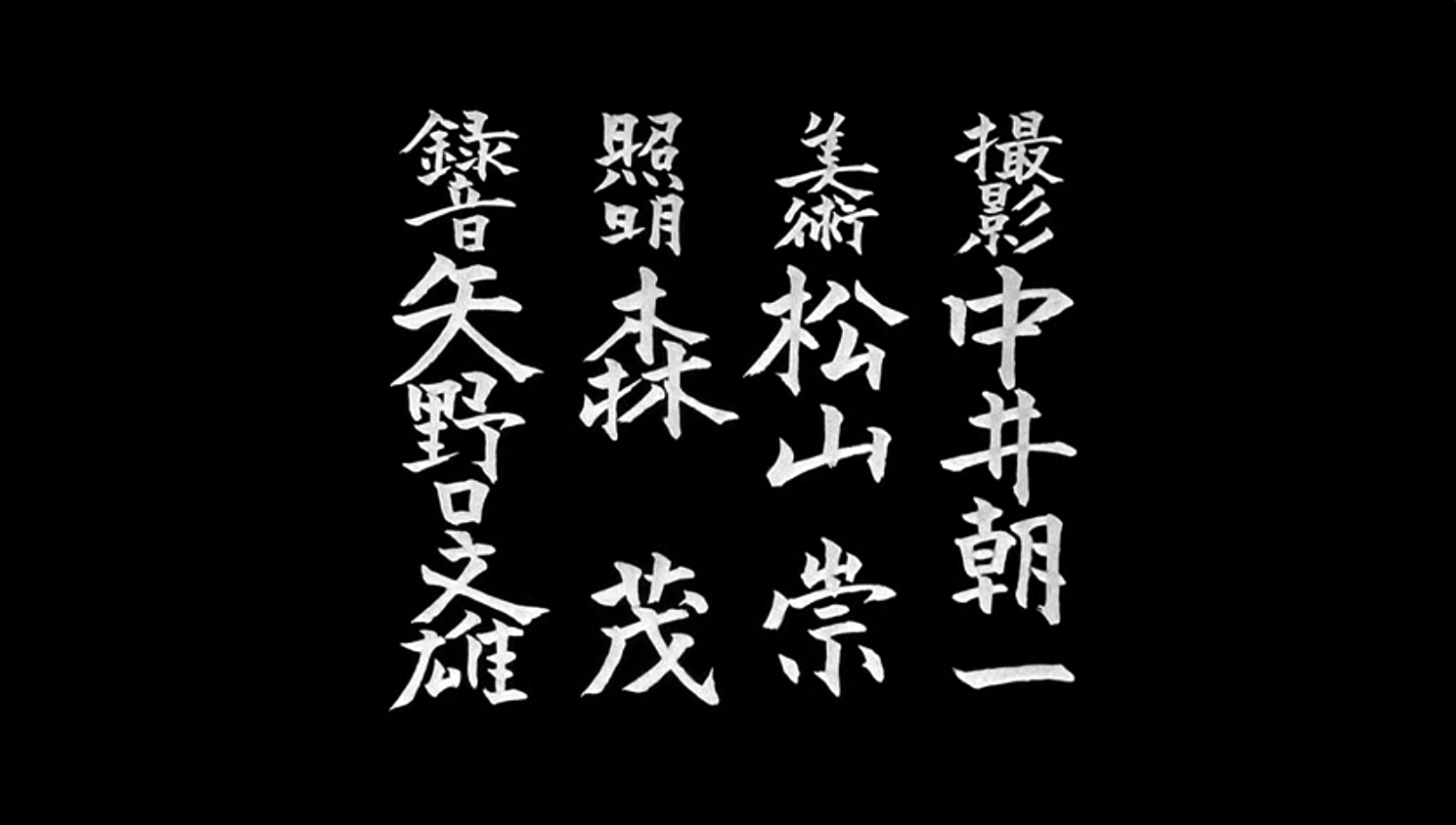
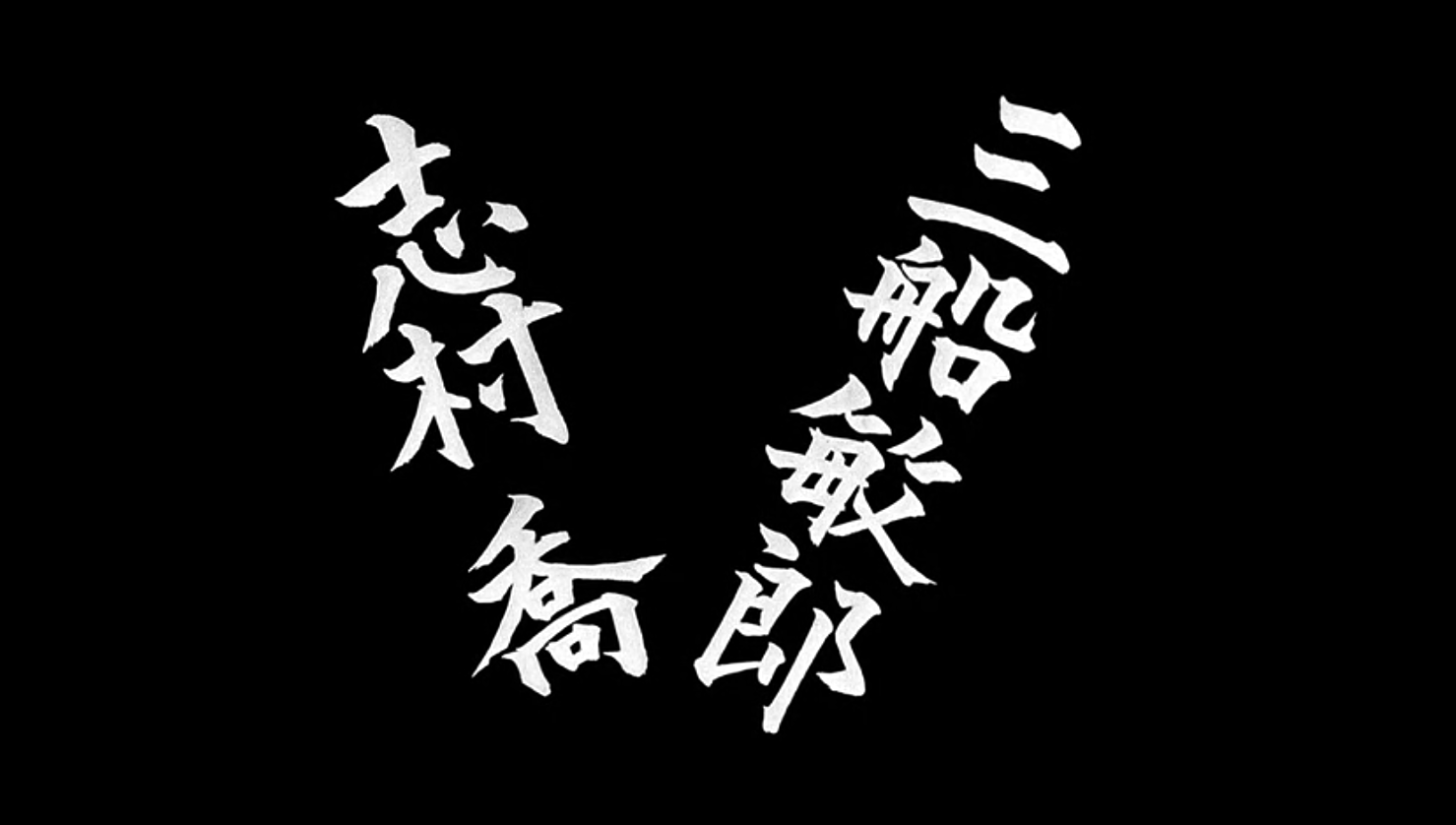
The lettering straightens out, but is horizontally aligned for the director credit.
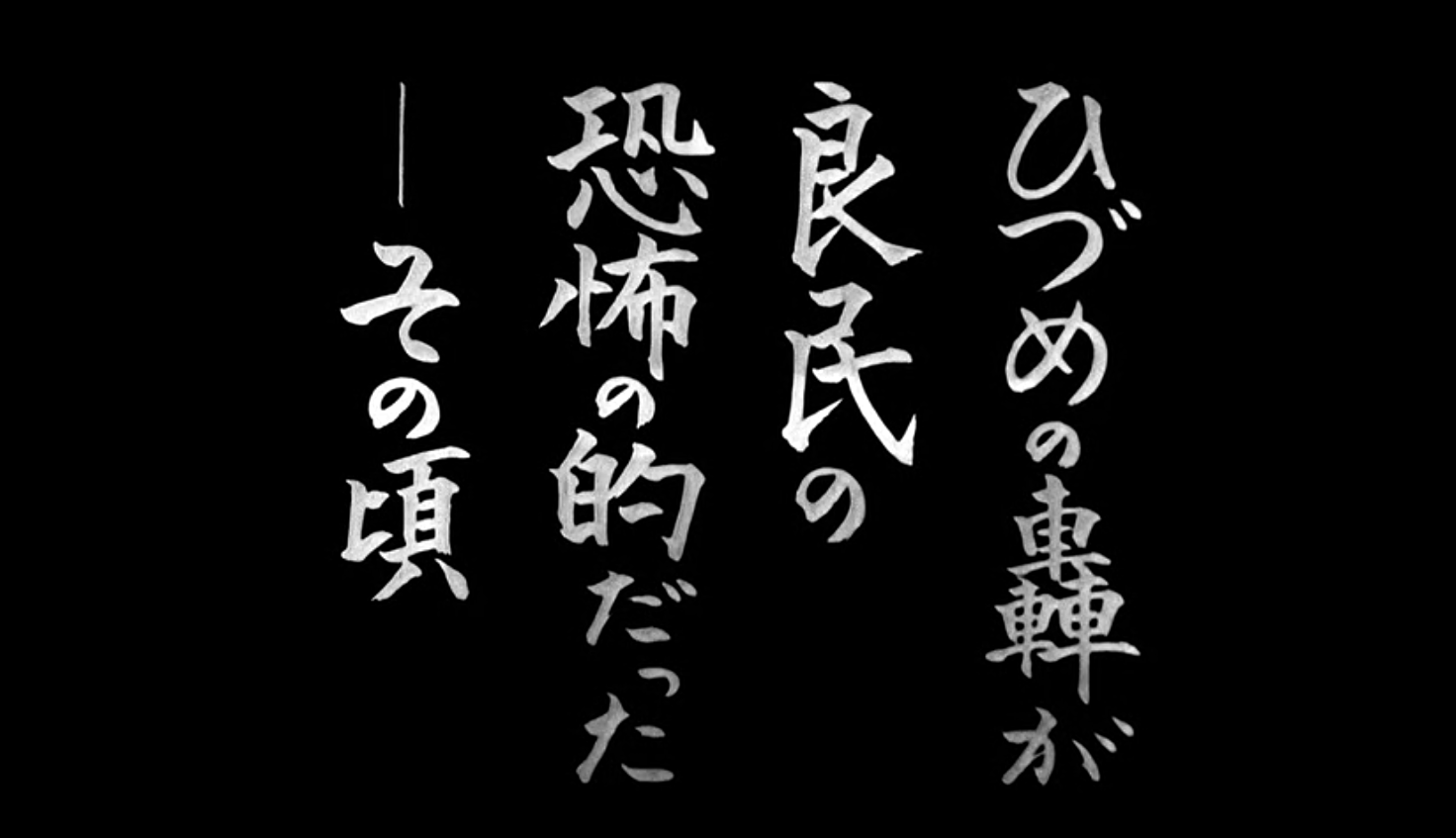
The vertically aligned (read up and down, right-to-left) prologue:
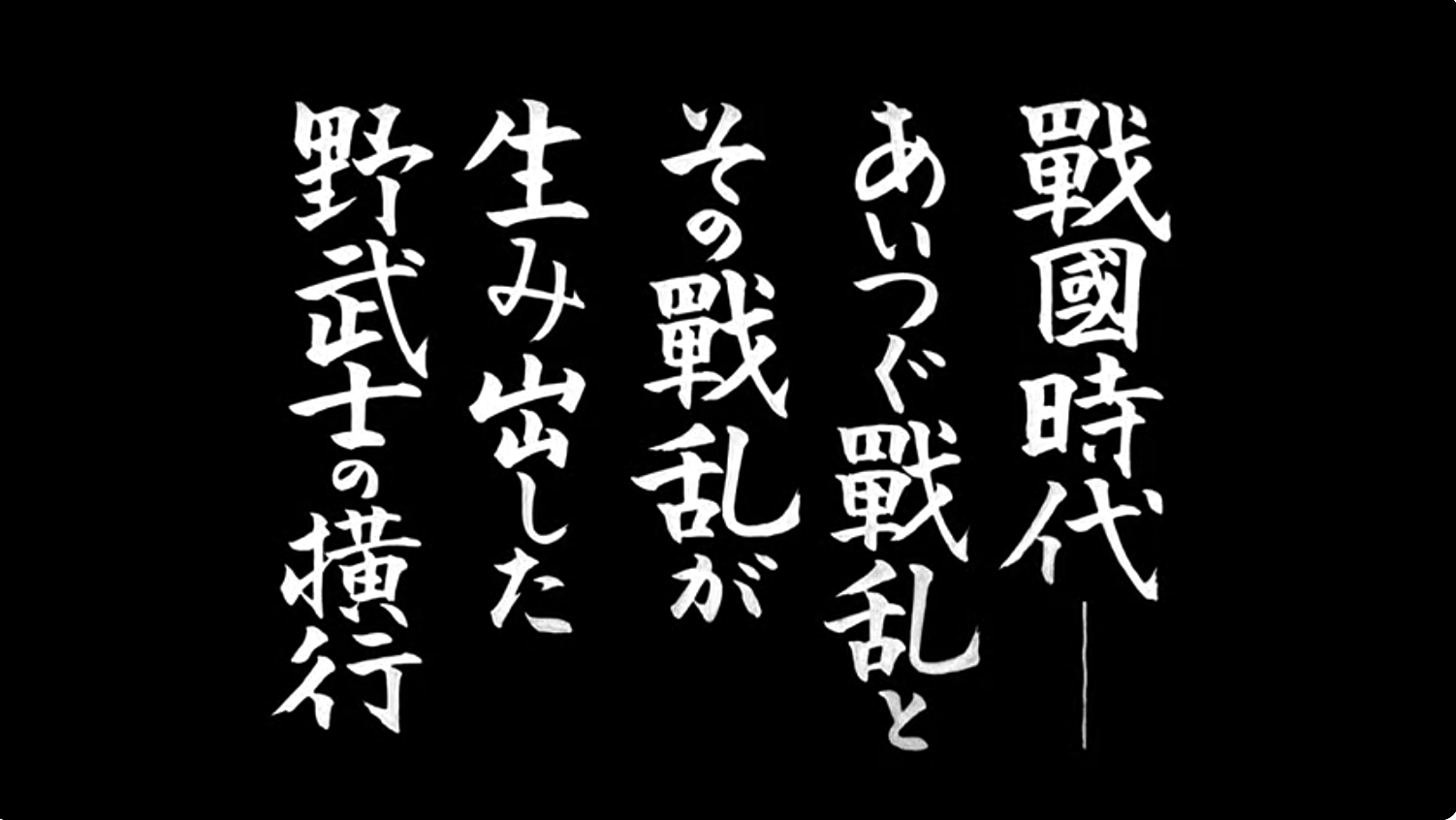
戦国時代ー
あいつぐ戦乱とその戦乱が生み出した野武士の横行
ひつめの轟が良民の恐怖の的だった
ーその頃
During the Civil Wars, an endless cycle of conflict left the countryside overrun by bandits. Peaceable folk lived in terror of the thunder of approaching hooves.
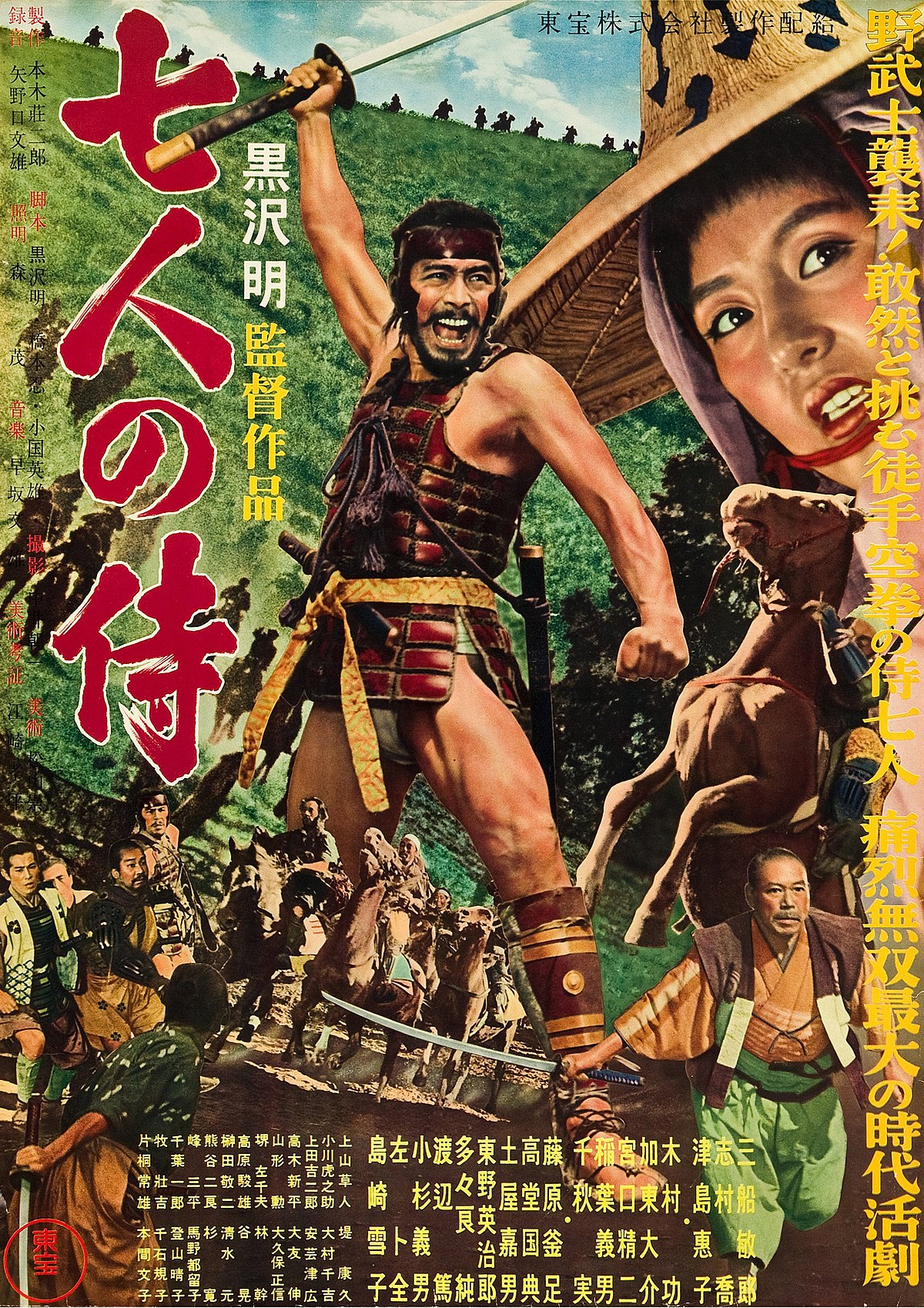 The first people the audience sees if the bandit gang. They have samurai helmets, and some have armor, but also others have bare legs. They look down on a village and discuss whether to hit that village again, but decide to wait until the harvest. It’s only after they leave that we realize a villager had been hiding and overheard them. He hurries down to the village and warns them. The villagers are distraught, but wonder what to do. They go to the village elder, Gisaku (Kokuten Kōdō) who advises them to look for hungry samurai.
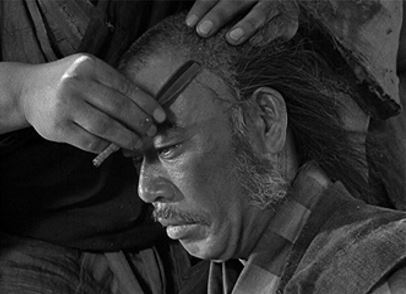 The villages travel to a town and find Kambei Shimada (Takashi Shimura) , who shaves his head and with the blessing of a priest, pretends to be a priest to save a child from a thief. Seeing this, the young samurai Katsushirō (Isao Kimora) asks to become Shimada’s disciple. The farmers ask Shimada for his help and after he agrees, he quickly recruits Shichiroji (Daisuke Katō). They soon are a group of six and only let Kichichiyo join after he follows them on their journey back.
Back in the village, Manzō (Kamatari Fujiwara) decides he must protect his daughter, Shino (Keiko Tsushima). She’s washing her long hair when he attacks her, cutting off her hair. She then is disguised as a boy. Except for the older women and young children, the other women all go into hiding. In this film, it is made clear that the threat to women is very real.
The samurai train the villagers. They are divided into squads, protecting different areas, armed with bamboo spears. Barriers are erected. During this, Katsushirō discovers that Shino is girl and despite class barriers, they become romantically entangled.
The fight against the bandits isn’t one battle, but minor skirmishes and raids that culminate in a final face-off. During this time, the samurai will learn that the villagers have killed samurai and saved their weapons and armor and that the farmers have suffered under the samurai. Moreover, during a raid in which one samurai, Heihachi Hayashida (Minoru Chiaki) dies, the men discover women forced into sexual slavery by the bandits. One of them is Rikichi’s wife who commits suicide.
The bandits have three guns. Kyūzō and Kikuchiyo will separately each get one, however, by abandoning his post, Kikuchiyo will allow the infiltration of bandits who kill some farmers and Katayama Gorobei (Yoshio Inaba).
The farmers and the samurai will win the final battle, but the surviving samurai will move on, leaving the farmers to plant their next crop.
The Seven
- Kambei Shimada 島田 勘兵衛 (Takashi Shimura) is the first samurai recruited. He is older and has accepted he will never have a great home and family.
- Shichiroji 七郎次 (Daisuke Katō) is Shimada’s friend and former lieutenant.
- Okamoto Katsushiro 岡本 勝四郎 (Isao Kimura) is the son of a wealthy samurai who wishes to become Shimada’s disciple.
- Gorobei Katayama 片山 五郎兵衛 (Yoshio Inaba) is the strategist and acts as his second-in-command.
- Heihachi Hayashida 林田 平八 (Minoru Chiaki) is a charming and humorous fighter who is found chopping wood.
- Kyuzo 久蔵 (Seiji Miyaguchi) is the skilled swordsman who is seen doing a mock duel which ends up being a real one when his adversary cannot admit defeat.
- Kikuchiyo 菊千代 (Toshiro Mifune) is an impetuous former peasant who pretends to be a samurai and is often contrasted for comic relief. He is the last to join.
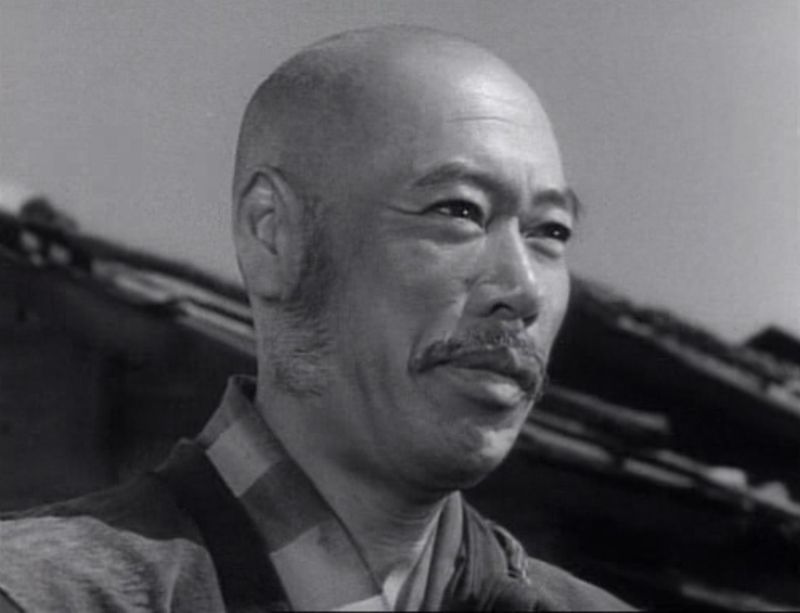 The leader of the seven, Kambei Shimada, has a last name that means “island rice paddy.” His “first name” means “intuitive” (勘) “soldier” (兵) and “protection” (衛).
“Katayama” means “side mountain” and “Gorobei” means “Fifth son” with the same “bei” as “Kambei.” This may mean that Gorobei is the “fifth son.”
“Kikuchiyo” means “chrysanthemum” and “a thousand generations.” As noted in the film, it is unlikely that is his real name. Chrysanthemums are the flower of the imperial family crest and white chrysanthemums represent death.
The surname “Hayashida” means “forest” and “rice paddy. “Heihachi” means “peaceful” and “eight.” This may or may not mean that Heihachi is the eighth son.
“Okamoto” means “one who lives at the base of a hill.” “Katsushiro” means “win” ( 勝), four (四) and “male” (郎). This might mean that he is the fourth son.
The name “Kyūzo” means “long time” and “warehouse” or “storage.” A homophone for “kyūzō” (急増) means “rapid increase” or “explosion.”
The name Shichiroji means “seventh son” and “following” (次). 急増
The title of the film, Shichinin no Samurai, already suggests death. When using the counter “nin” for people, we’re taught in Japanese not to use “shichi” but to use the alternative pronunciation for the Chinese character for “seven” (七) so instead of “shichinin” one would say “nananin.” That’s because “shichi” meaning “number seven” is a homophone for “shichi” (死地) meaning “place of death.” The word for “four” (四) is often pronounced “yon” or “yo.” So when referring to “four people,” it would be “yonin” (四人) and not “shinin” and the character for death and person together (死人)is actually pronounced “shibito.”
In Japanese, the numbers four, seven and nine are considered unlucky. Nine can be pronounced “ku” or “kyū” and “ku” can mean ”bitter” (苦). The presence of unlucky numbers within this group of seven and even the inclusion of a neutral number (five) and a lucky number (eight) sets a somber reality. None of these men were named in a manner that showed they were either the first-born son (長男) or second-born son. In a time of war, confusion and famine, they would be alienated from their families because of primogeniture inheritance customs. The continuation of their familial line isn’t dependent upon their survival.
The Villagers:
- Rikichi (利吉): A temperamental man played by Yoshio Tsuchiya.
- Yohei (与平): A timid, older man played by Bokuzen Hidari .
- Gisaku (儀作), village elder (Kokuten Kōdō)
- Manzō (万造), the farmer who disguises his daughter as a boy by cutting her hair.
- Mosuke, one of the farmers sent to hire the samurai
“Rikishi” means “auspicious” but also recalls a Chinese saying which in Japanese is pronounced “daikichi dairi” (大吉大利) or in Mandarin Chinese “dàjídàlì” meaning, “great luck, great profit.”
“Yohei” means “give peace.” “Gisaku” means “ceremony” or “rule” and “make” or “produce.” “Manzō” means “ten thousand” and “construction.”
Of the peasants, we do have male characters that are named and have lines and who react differently to the challenge of defending their homes from the bandits.
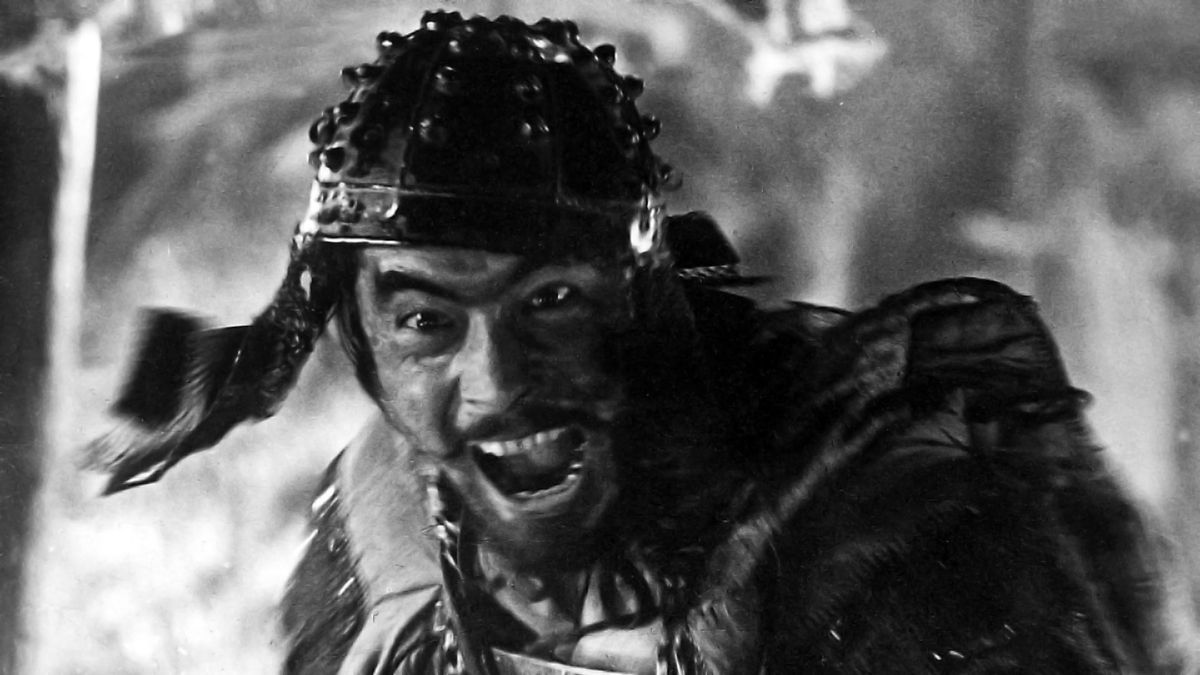 Kikuchiyo shows us and helps define the cultural differences between the samurai and the peasants as Kikuchiyo’s actions often are impetuous and reflect his upbringing contrasting his aspiration to become a samurai.
For the Japanese, the importance of rice would be well known. Hideyoshi Toyotomi introduced the kokudaka system which is “an estimate of the annual yield of farmland. “ During the Tokugawa shogunate (1603-1868), each feudal domain was assessed by its rice production yield. Samurai used to be paid in rice, measured as koku or “the amount of rice consumed by one person in one year.” That would be 48 US gallons or 150 kilograms (330 lbs) of rice.
The Women
- Rikichi’s wife (Yukiko Shimazaki )
- Shino (志乃), Manzō’s daughter (Keiko Tsushima)
- Gisaku’s Daughter-in-Law (Haruki Toyama)
 In the film, women are defined by the men in their lives. Even the old grandmother who kills one of the bandits is defined by the death of her family. Women used in the film as objects of desire. With the exception of Shino, the women of the village do not exist as fully developed characters and even Shino is more of a plot device because we’re never quite sure of her motivations. The first character of her name, “kokorozashi” (志)means “will” or “motive.” The “no” means “accordingly” or is a possessive particle (no).
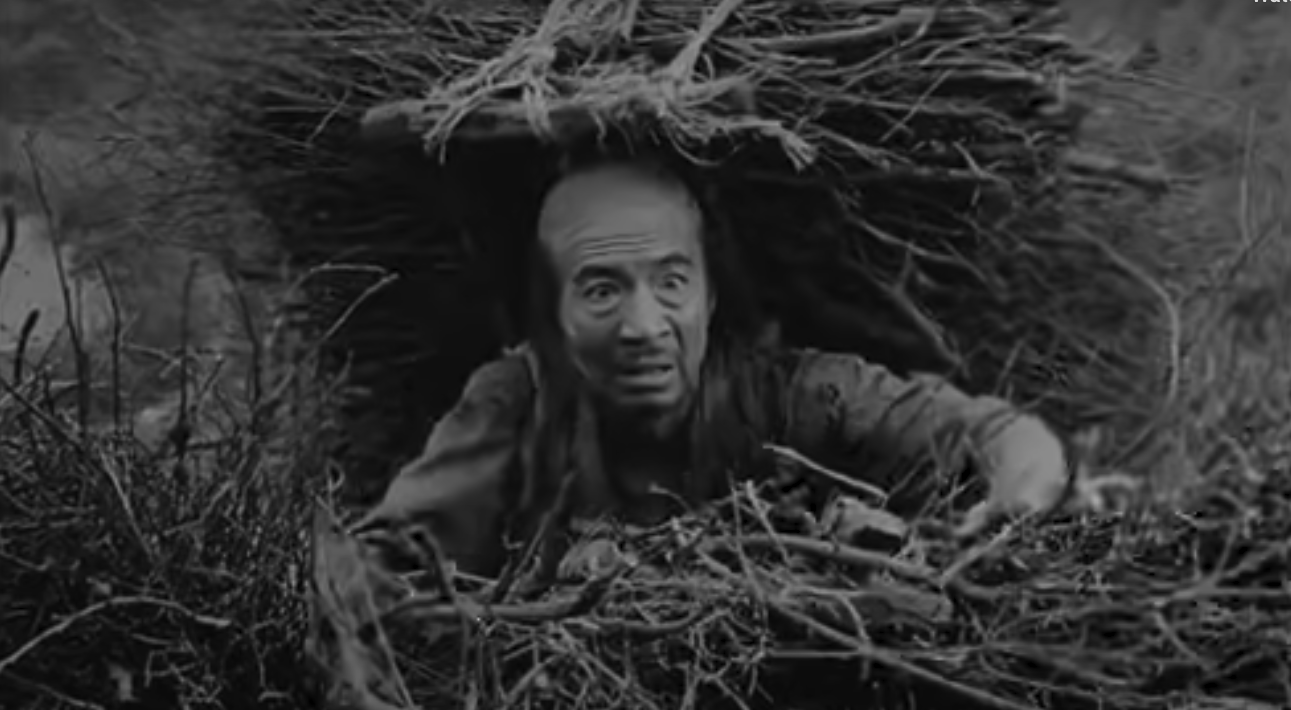
The first women represented on the screen are seen from behind. The first voice of the villagers is that woman’s voice, but it’s her behind/buttocks that the camera focuses in on as a female child clings to her. By this time, we’ve already seen the face of one of the male peasants–a man gathering sticks has seen the bandits and in terror, wordlessly runs down to his village. She cries:
Is there no god to protect us?
Land tax, forced labor, war, drought…and now bandits.
She is represented by her butt while we begin to see the faces of the men of the village.
The gods wants us farmers dead!
Another woman suggests suicide. When one man suggests that they kill the bandits, another says, that’s crazy talk. But the man retorts: “So we can kill defeated samurai but not bandits?”
These people have killed before, but the women can be bereft of hope, wishing to commit suicide or complaining that the gods do not protect them, and yet they can also kill as with the old woman who is allowed to kill to avenge her family or even a gang of women taking farming tool to kill on a scrambling bandit. Yet when two bandits, including one brandishing a gun, invade the house they are in, the women all scatter and cringe, helpless. This I found questionable. My husband did not.
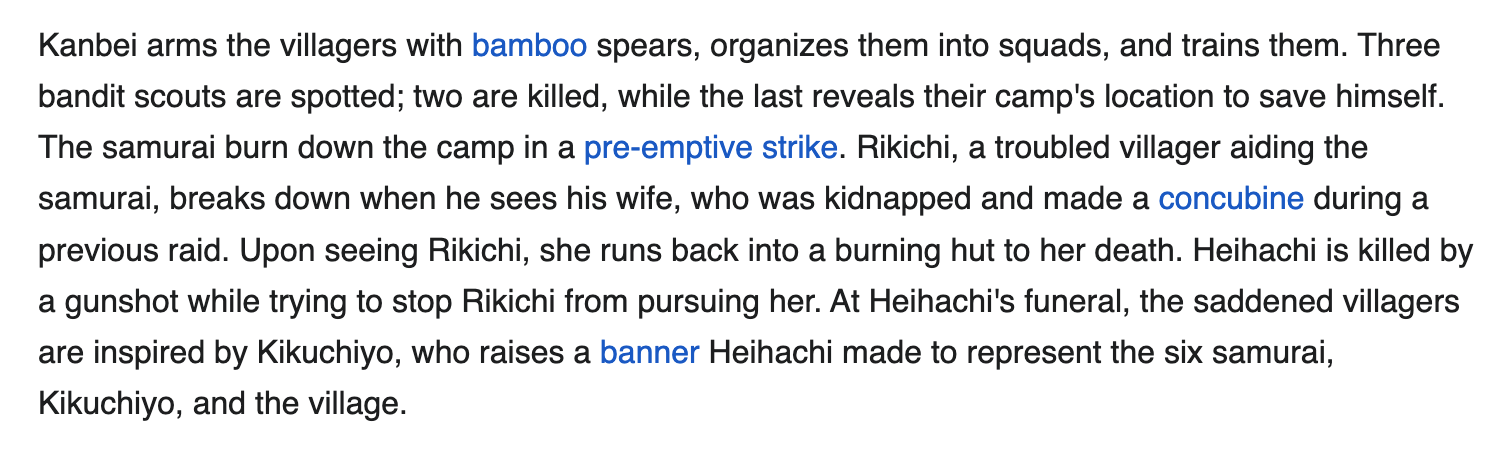 Rikichi’s wife preferred death to a reunion with her husband. Although the current Wikipedia entry for “Seven Samurai” labels her as a “concubine,” which according to Merriam-Webster means either “a woman with whom a man cohabits without being married” or “one having a recognized social status in a household below that of a wife,” but “concubine” this misses the contextual meaning of a woman abducted from her village and husband against her will and forced into sexual slavery. The film makes it clear that Rikichi’s wife isn’t happy with her situation, her husband was helpless to save her and she preferred death to the disgrace and trauma of her life.
I did wonder about the anger of Shino’s father, Manzō, about her losing her virtue because of the practice of “night crawling” or “yobai” (夜這い). While generally this is presented as a benign practice where young unmarried men snuck into houses and had supposedly consensual sex with a woman, I have to wonder if in practice the sexual contact was always consensual. In some local practices, men would only visit married women or widows and not single girls.
Manzō’s reaction though would be easily accepted in the US because it aligns with old-fashioned Judeo-Christian values.
Yet the film offers little insight into women and women as part of the samurai or village cultures, really. The women are there to service the storyline of the men, not as individuals or important parts of the culture. The script, however, shows a beautiful balance between the drama and comedy.
“Seven Samurai” is a must-see for people interested in Japanese culture and in the history of world cinema because of the influence of this film internationally. The film also has a more complex view of the world than the Western it inspired, “The Magnificent Seven.”
 Age of the Geek